
Good Backlinks for SEO: A Guide for Marketing Leaders in 2026
Discover what makes good backlinks for SEO. This guide helps marketing leaders evaluate, acquire, & measure high-authority links for real business growth.
What makes a backlink “good” for SEO in 2026? It’s not a technical secret. It’s a digital vote of confidence from a respected peer that drives business growth.
A good backlink is a strategic referral. It sends not just traffic, but also authority, telling search engines your company is a credible leader. For marketing leaders and business owners, understanding this is the key to building a defensible competitive advantage.
Defining a Good Backlink in Business Terms
Let's cut through the jargon. A backlink is simply a link from another website to yours. But its quality separates a high-ROI business asset from worthless digital noise.
Think of it this way: an endorsement from a top industry analyst in a keynote speech would drive qualified leads and boost your reputation instantly. That’s exactly what good backlinks for SEO do in the digital world.
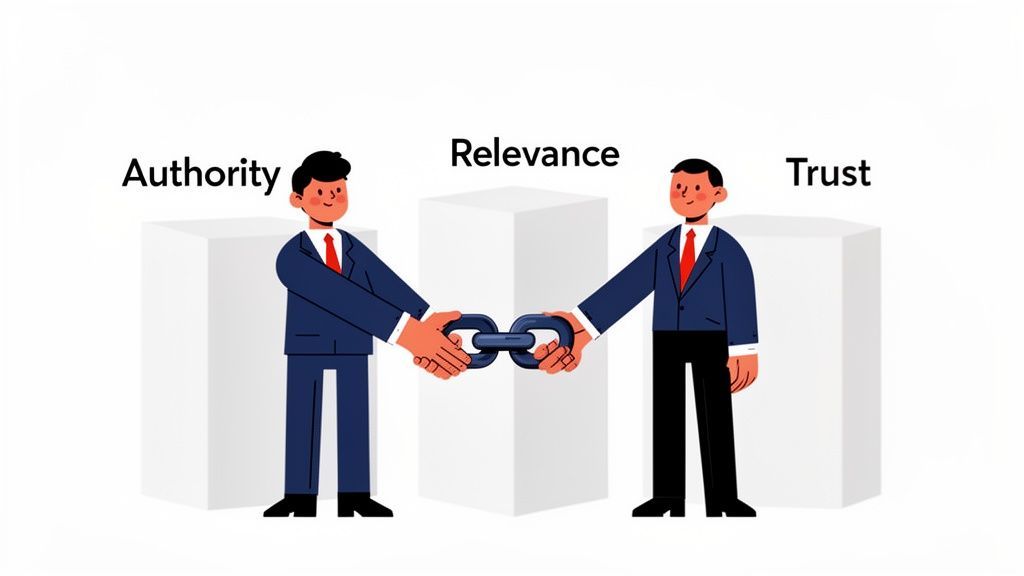
The Three Pillars of a High-Value Backlink
To translate this into an actionable framework, every high-value backlink must have three core qualities. This is the exact lens Ezca uses to ensure every link we build drives measurable business outcomes.
- Authority: Is the link from a genuine authority? A mention from The Wall Street Journal or a top-tier trade publication carries immense weight.
- Relevance: Is the source relevant to your business? A link must come from a site that serves your target audience, placed within content that’s a natural fit.
- Trust: Does the website have a trustworthy footprint? Google is exceptional at identifying and devaluing links from spammy, low-quality, or private blog networks (PBNs).
The mechanism behind this is link equity—the value passed from one site to another through a link. A link from a site with high authority, relevance, and trust passes significant equity, giving your domain a powerful boost.
A high-quality backlink isn't just an SEO metric; it's a strategic asset that builds brand authority, drives high-intent traffic, and creates a competitive advantage that is difficult and expensive for rivals to replicate.
This mindset shift transforms link building from a tedious numbers game into a focused, high-ROI business development activity.
High-ROI vs. Low-ROI Backlink Characteristics
This table helps you and your team quickly vet opportunities and avoid wasting resources on low-impact activities.
Ultimately, a link that helps a real human discover your business is a link Google will reward. A link that serves no purpose other than to "get a link" is a waste of time and budget.
Why Backlinks Are a Powerful Competitive Advantage
Competitors can copy your features, match your pricing, or outspend you on ads. They cannot easily replicate a backlink profile built over years of genuine relationship-building and value creation. This is your defensible moat.
Every good backlink for SEO is a public endorsement. When a respected site points to your content, it signals to Google that you are a trustworthy and authoritative resource. This isn't just about climbing rankings; it’s about cementing your brand as an industry leader.
Backlinks as Votes of Trust
Google’s mission is to provide users with the most credible answers. It views high-quality backlinks as clear votes of trust. For any business—SaaS, e-commerce, or B2B—this digital trust is a direct line to sustainable growth.
This trust is what earns you the right to compete for high-value commercial keywords—the terms people search when they are ready to make a purchasing decision. Without it, even the best content struggles for visibility.
A strategic investment in backlinks is an investment in your domain's fundamental authority. It’s the difference between building your business on rented land (like social media) versus owning a prime piece of digital real estate.
This process compounds. As your authority grows, attracting more links becomes easier, helping you rank for more competitive keywords and creating a virtuous cycle that widens the gap between you and your competitors.
Securing a Sustainable Customer Pipeline
For a marketing leader, the goal is a predictable, scalable customer pipeline. A strong backlink profile is one of the most reliable ways to build one. Unlike a paid ad campaign that vanishes the moment you stop funding it, the authority from backlinks is an asset that delivers value for years.
Data confirms this. The correlation between backlinks and rankings is one of the most proven in SEO. Studies consistently show that over 90% of pages in top 10 search results have at least one backlink. Meanwhile, an estimated 95% of all web pages have zero backlinks. This chasm highlights the critical role of links in achieving visibility. You can discover more insights about this and SEO in 2026 by reading the full research.
This visibility fuels your acquisition engine. High rankings built on a solid foundation of backlinks deliver a steady stream of organic traffic from prospects actively seeking your solutions.
At Ezca, this is our focus: building this strategic asset for our clients because we know it delivers a far greater long-term ROI than temporary marketing tactics. It creates a lasting advantage that is incredibly difficult and expensive for competitors to challenge.
A Practical Framework for Evaluating Link Quality
Knowing what makes a good backlink is one thing; identifying high-impact opportunities is another. How do you separate game-changers from time-wasters?
You need a reliable system for making data-backed decisions that connect your team's work directly to business growth. We've refined our process at Ezca to a straightforward framework built on three core pillars.
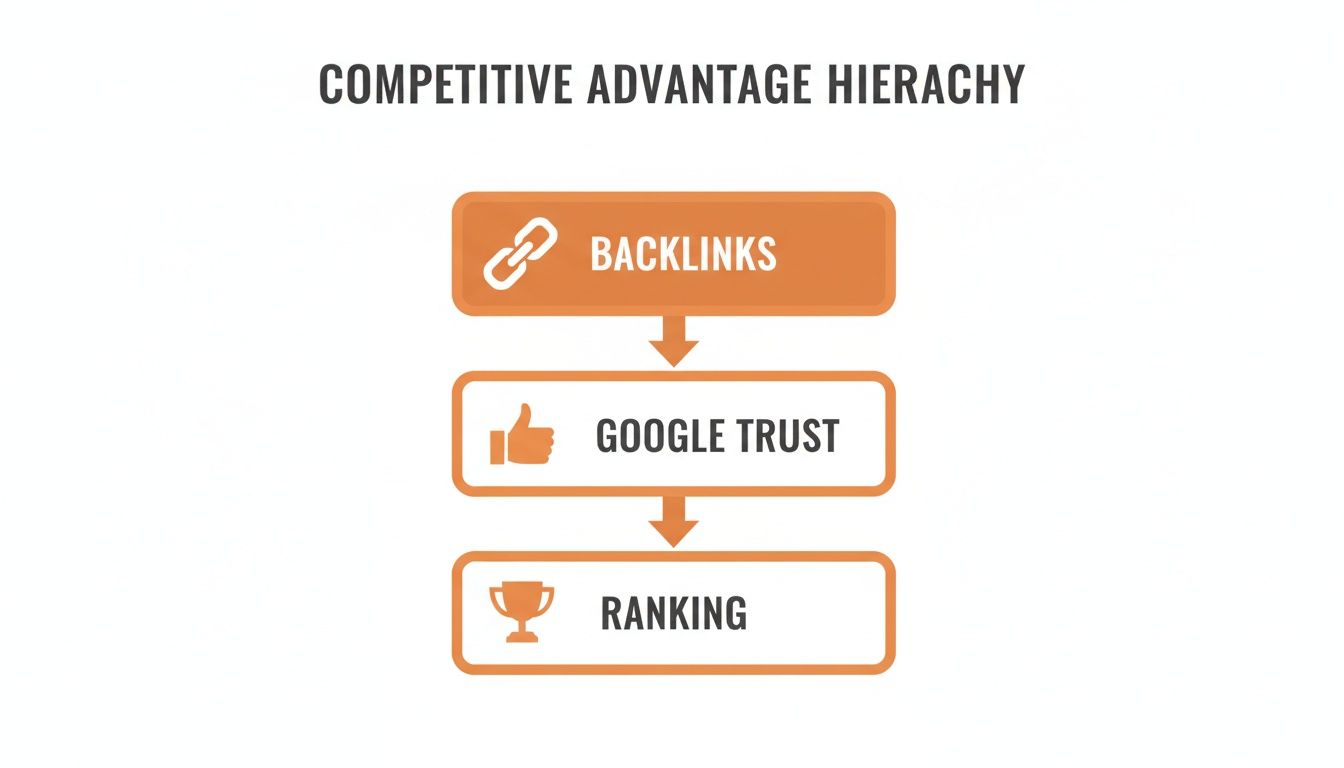
This simple hierarchy shows how it all connects. Quality backlinks act as votes of confidence, building Google's trust in your site. That trust is what earns you higher rankings and, ultimately, more customers.
Let's break down each pillar.
Pillar 1: Authority
Authority is the foundation of any good link. It measures the linking website's power and credibility. A link from a high-authority site is like a public endorsement from a respected expert—it carries more weight.
We measure this using industry-standard metrics like Domain Rating (DR) from Ahrefs or Authority Score (AS) from Semrush. These tools score websites on a 0-100 scale, providing a reliable proxy for a site's influence.
Here’s a quick reference for what those numbers mean in practice:
- Good:DR 30-50. Solid industry blogs, local news outlets, or established company sites.
- Great:DR 51-70. Well-known niche publications and major trade journals.
- Game-Changing:DR 71+. Top-tier news organizations, government sites, and industry giants like Gartner or HubSpot.
Pillar 2: Relevance
A crucial point for ROI: a powerful link from an irrelevant website is nearly worthless. Relevance is the glue that makes authority stick.
This works on two levels. First, domain-level relevance. If you're a B2B SaaS company, a link from a software review site is a perfect match. A link from a celebrity gossip blog, even with high DR, is not.
Second, page-level relevance. The link must feel natural within the surrounding content. Does it add value for the reader? If it looks forced, its value plummets in Google's eyes.
A link from a DR 50 industry-specific blog post that perfectly matches your audience is often more valuable than a generic link from a DR 75 general news site. Relevance amplifies authority.
Pillar 3: Traffic Potential
This final pillar connects link building to real-world business impact. While a backlink's primary SEO job is to pass authority, its business job is to send you customers. A link on a page that gets thousands of visits from your target audience each month is an incredible asset.
Use a tool like Ahrefs to check a page's estimated organic traffic. Don't just look at the site's overall traffic; zoom in on the specific page where your link would live.
Imagine weighing two opportunities:
- Opportunity A: A link on a DR 70 national news site. The page gets 5,000 monthly visits, but the audience is broad and unfocused.
- Opportunity B: A link in a DR 45 niche podcast's show notes. The page only gets 500 monthly visits, but every visitor is your ideal customer profile.
While Opportunity A has the bigger authority number, Opportunity B is far more likely to deliver a real ROI through qualified leads and sales. This is the strategic thinking our team applies when managing comprehensive SEO services—balancing all three pillars to maximize results.
The Four Modern Strategies for Acquiring Good Backlinks
You know what a high-quality backlink looks like. Now, let’s get tactical.
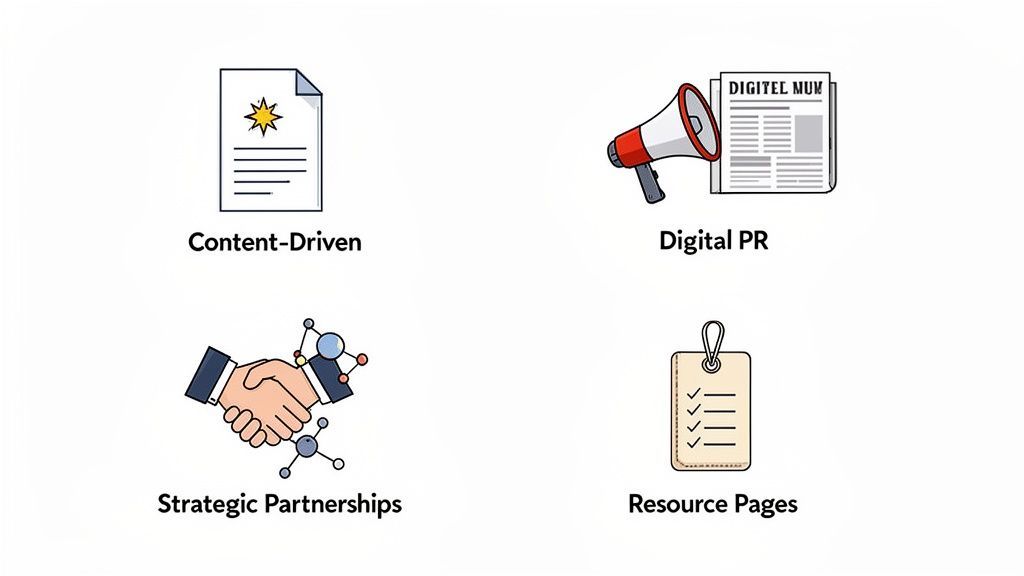
This is the modern playbook for earning links that build your brand and create business momentum. These four pillars are the foundation of any link-building strategy that stands the test of time. Forget risky shortcuts; we're focusing on earning placement through genuine value.
Strategy 1: Content-Driven Link Building
This is the core of modern link building. Instead of asking for links, you create "linkable assets" so valuable that others feel compelled to share and reference them.
The goal is to produce something unique that plugs a knowledge gap in your industry. This could be original research, a free tool, or the most comprehensive guide on a topic. It becomes a go-to resource that journalists and bloggers naturally cite.
Types of high-performing linkable assets:
- Original Data & Research: Survey your customers or analyze public data to publish a unique industry report.
- Free Tools & Calculators: Build a simple tool that solves a nagging problem for your audience, like an ROI calculator.
- Definitive Guides & "Ultimate" Resources: Create the single best resource on a topic, making all other guides seem incomplete.
- Expert Roundups: Gather quotes from industry experts on a single pressing question. The experts themselves are then motivated to share the final piece.
SaaS Mini-Case Study: A B2B project management software company publishes a report on "The State of Remote Work Productivity," packed with compelling statistics. Industry blogs and business publications link to this report as a data source, driving thousands of high-authority links and cementing the company as a thought leader. The ROI comes from brand authority and targeted referral traffic.
Strategy 2: Digital PR
Digital PR turns your company's stories and data into high-authority media mentions. It's classic public relations, but laser-focused on securing online coverage that includes a backlink.
This is more than sending press releases. It's proactively inserting your brand's expertise into the stories journalists are already writing. For example, your team can pitch your CEO as an expert source for an article on AI in marketing. When the story goes live with their quote and a link, you've earned a powerful backlink from a trusted news outlet.
At Ezca, we find Digital PR is most effective when integrated with content strategy. We often build a linkable asset specifically to create a newsworthy hook, then use it to pitch top-tier publications, landing clients in front of their ideal customers.
Strategy 3: Strategic Partnerships
No business operates in a vacuum. You exist within an ecosystem of non-competing companies serving the same audience. This strategy involves collaborating with these "ecosystem partners" for mutual benefit.
This goes beyond one-off guest posts. It’s about building real relationships that generate natural, valuable links over time.
High-ROI partnership tactics:
- Integration Marketplaces: For SaaS companies, getting listed on a partner's integration page is a home run for relevant, high-intent backlinks.
- Co-marketing Campaigns: Host a webinar or co-author an ebook with a partner. This gives both brands a compelling reason to promote the content and link to each other.
- "Recommended Tools" Pages: Work to get your product featured on a partner's curated list of recommended tools or services.
E-commerce Mini-Case Study: An online store selling premium coffee partners with a company that sells high-end espresso machines. They create a joint guide, "The Ultimate Home Barista Setup," which lives on both of their blogs. Both companies link to the guide and each other's products, driving qualified traffic and sales for both.
Strategy 4: Resource Page Link Building
This is one of the most straightforward and consistently effective tactics. The goal is to find existing articles that list helpful resources on a specific topic, then get your valuable content added to the list.
The process is simple:
- Identify a linkable asset on your site (like a definitive guide or free tool).
- Find relevant resource pages using Google searches like
inurl:resources "your topic". - Reach out to the site owner, politely explaining why your resource would be a valuable addition for their audience.
This method lands you links on pages that Google already sees as valuable information hubs. It’s critical to approach this authentically. While some will tell you otherwise, you must know how to purchase quality backlinks and avoid getting burned by steering clear of paid placement schemes that violate search engine guidelines. Real resource page building is about adding genuine value, not buying a spot on a list.
How to Measure the True ROI of Your Link Building
As a marketing leader, you live by the numbers. Every dollar must be accountable, and link building is no exception. While it's a long-term play, its impact can and should be tracked with the same rigor as a paid ad campaign.
Measuring the ROI of good backlinks for SEO isn't about a single magic metric. It's about telling a data-driven story, from early signals of success to the direct impact on your bottom line.
Leading Indicators: The Early Signs of Success (Months 1-6)
Leading indicators are the first green shoots. They show up early, signaling that your investment is taking root and Google is noticing your growing authority. You won't see a massive traffic spike overnight, but you'll see these signals within the first 3-6 months of a consistent campaign.
- Domain Rating (DR) Growth: A rising DR score is a foundational metric. It confirms that the links you’re earning are effectively passing authority and boosting your site's overall potential to rank.
- New Referring Domains: Growth in the number of unique websites linking to you is a massive trust signal for Google. It shows your brand is becoming a recognized voice in its space.
- Keyword Ranking Improvements: This is where the rubber meets the road. Monitor a core group of target keywords. As you build relevant links, you should see them begin their climb toward page one.
A classic mistake is to get impatient and judge a link building campaign on traffic alone in the first 90 days. Focus on these leading indicators. They are the reliable predictors of the business results that will come.
Lagging Indicators: The Bottom-Line Impact (Months 6-12+)
If leading indicators confirm your strategy is working, lagging indicators are what you take to the C-suite. These are the tangible business outcomes that demonstrate clear ROI. You'll typically see these metrics move in a meaningful way after the 6-month mark.
This is where you can connect your investment directly to revenue. If you invest $15,000 in link building over six months and see a corresponding lift in organic leads, you can calculate the direct impact on your customer acquisition cost (CAC).
Key bottom-line metrics:
- Increase in Organic Traffic: As keyword rankings improve, a lift in non-branded organic traffic is the direct result. More about this in our guide on how to increase organic traffic.
- Growth in Qualified Leads or Sales: This is the ultimate prize. By tracking conversions in your analytics, you can attribute new demo requests, trial sign-ups, or sales directly to your SEO investment.
- Improved Customer Acquisition Cost (CAC): A powerful SEO presence reduces dependency on expensive paid channels. By comparing the cost to acquire a customer through organic search versus paid ads, you can demonstrate a clear and compelling ROI.
At Ezca, we provide our partners with a performance dashboard that visualizes this entire story—from links built to the impact on traffic, leads, and revenue. This level of reporting is how you hold an agency accountable and ensure your investment is building a truly valuable business asset.
How to Choose the Right Link Building Partner
Choosing a link building partner is a high-stakes decision. Get it wrong, and you can waste budget, harm your backlink profile, and face a cleanup that takes years. Get it right, and you build a competitive advantage that pays dividends for years.
You aren't just outsourcing a task; you are selecting a steward for your brand's online reputation. They must be obsessed with your ROI, not just counting links.
Key Questions to Vet Potential Partners
Cut through the sales pitch with these direct questions to see if a potential partner is focused on sustainable growth or risky shortcuts.
- Strategy: "Walk me through your process for building a link building strategy for a business like mine." What to listen for: They should immediately talk about competitor analysis, identifying your unique linkable assets, and tying their plan to your business goals (e.g., B2B leads, e-commerce sales). Vague, cookie-cutter answers are a major red flag.
Tactics: "Which link building tactics do you use? And more importantly, what do you refuse to do?"
- What to listen for: You want to hear about modern approaches like Digital PR, content-driven outreach, and strategic partnerships. If they mention private blog networks (PBNs) or paid link schemes, they don't respect search engine guidelines—or your business.
Ethics & Transparency: "How will we know where our links come from? Can you guarantee a certain number of links each month?"
- What to listen for: The right answer is a commitment to 100% transparency. They should be proud to show you every link they build. Run from any agency offering link guarantees. Quality links are earned, not bought at a fixed rate, and guarantees incentivize low-quality tactics.
Reporting and Measuring Success
A true partner reports on outcomes, not just activities. Their reports must draw a straight line from their work to your business goals.
Here's the most important question you can ask: "How do you measure the ROI of your link building?" A top-tier partner will talk about leading indicators like Domain Rating growth and, more importantly, lagging indicators like more organic traffic and qualified leads. A vendor will just show you a list of links they built.
Deciding between building this capability in-house or hiring an expert is a major strategic choice. Our analysis on in-house vs agency marketing teams can help clarify this decision.
Ultimately, you are looking for a partner, not a vendor. At Ezca, we know we are only successful if you are, which is why we focus on the metrics that matter to your bottom line: traffic, leads, and revenue. That should be the standard you demand.
Straight Answers to Your Toughest Backlink Questions
As a marketing leader, you've likely had these questions. Here are clear, practical answers about what it takes to build a portfolio of good backlinks for SEO.
How Many Backlinks Do I Actually Need to Rank?
There is no magic number. It's a game of quality and momentum, not raw quantity.
One glowing recommendation from a top industry voice is worth more than a hundred vague compliments from strangers. The goal isn't an arbitrary number; it's to consistently build a stronger, more authoritative backlink profile than your direct competitors. Benchmark against the pages already winning for your target keywords and build a strategy to surpass their link quality over time.
Are Nofollow Links a Waste of Time for SEO?
Absolutely not. While "dofollow" links pass direct SEO authority, "nofollow" links are crucial for a healthy, natural link profile that Google expects to see.
A "nofollow" link from a major site like Forbes or a relevant Wikipedia page is a huge win. It drives referral traffic, generates leads, and builds brand credibility. A sophisticated strategy embraces a natural mix of both link types, always prioritizing the quality and relevance of the source.
The real job of a great backlink isn't just to pass authority—it's to put your brand in front of the right people. A 'nofollow' link that drives new customers is an undeniable win for the business, period.
How Long Does Link Building Take to Show Results?
Link building is a long-term investment in your brand's authority, not a switch you flip for instant results. While referral traffic from a new link can be immediate, the SEO impact takes time for search engines to process.
A realistic timeline of what to expect:
- 1-3 Months: You'll start to see leading indicators like a rising Domain Rating and an increase in new referring domains.
- 3-6 Months: This is typically when you'll begin to see measurable gains in keyword rankings from a consistent, well-executed campaign.
This is precisely why Ezca organizes our work into focused 90-day sprints. It’s the right cadence to build meaningful momentum while tracking the progress that leads to long-term, sustainable business growth.