
Your Guide to Hiring a B2B Lead Generation Agency That Delivers ROI
Find a b2b lead generation agency with proven ROI-driven strategies, transparent pricing, and measurable metrics to scale your pipeline.
If your sales pipeline feels more like a trickle than a river, you're not alone. For most business owners and marketing leaders, the biggest frustration is an unpredictable flow of qualified leads. That inconsistency directly stalls revenue and makes growth a guessing game.
A specialized B2B lead generation agency isn’t just another vendor—they are a growth partner. Their sole focus is to build a predictable, repeatable engine that keeps your sales team fed with high-quality, sales-ready opportunities.
Why Your Sales Pipeline Is Stalling
Many marketing leaders and founders know the feeling all too well: one month brings a flood of inquiries, but the next is a painful drought. This feast-or-famine cycle makes forecasting a nightmare and puts immense pressure on your sales team to hit targets with an empty calendar.
The problem usually runs deeper than a lack of effort. Today's B2B buying committees are expanding, sales cycles are stretching out, and simply reaching the right decision-makers has become a monumental challenge. Your internal team, likely wearing multiple hats, may lack the specialized skills or bandwidth to cut through that noise effectively.
The Real Cost of a Weak Pipeline
A stagnant pipeline isn't just an annoyance; it has a direct, and often painful, financial impact. When leads dry up, the knee-jerk reaction is to throw more money at ads or push for more cold calls. This often just drives up your Customer Acquisition Cost (CAC) without a proportional increase in revenue, eroding profit margins.
Even worse, a weak pipeline forces your highly-paid sales reps to spend their days prospecting instead of closing deals. That’s a massive waste of their talent and a hidden cost that quietly drains your bottom line. A dedicated B2B lead generation agency flips this script, letting your closers focus on what they do best: closing.
Navigating Today's B2B Buying Journey
The modern B2B buyer is self-sufficient. They complete a significant portion of their research—reading reviews, comparing solutions, and consulting their network—long before engaging with a salesperson. This makes old-school "spray and pray" tactics almost completely useless.
To win today, you have to meet buyers where they already are. For B2B, that overwhelmingly means LinkedIn. An incredible 89% of B2B marketers now use it for sourcing leads. The data is clear: LinkedIn is responsible for around 80% of all B2B social media leads, and 62% of marketers say it consistently delivers high-quality prospects.
With buying cycles now averaging a lengthy 11.3 months, platforms like LinkedIn are indispensable for personalizing your approach and connecting with decision-makers. You can explore more lead generation statistics to get a clearer sense of the landscape.
Actionable Insight: An expert agency doesn't just hand you a list of names. It builds a data-driven system to find, engage, and nurture high-intent prospects on the channels they trust, turning a stalled pipeline into a predictable revenue machine.
Choosing between building this capability in-house or hiring an expert partner is a major strategic decision. Each path has clear trade-offs depending on your company's stage, resources, and growth targets.
Here’s a practical look at the core trade-offs:
In-House vs. Agency Lead Generation At a Glance
Ultimately, building an in-house team offers more direct control but at a significant cost in time, money, and focus. Partnering with an agency provides immediate access to expertise and a proven system, allowing your team to stay focused on closing business and serving customers.
The Modern B2B Lead Generation Playbook
When you hire a B2B lead generation agency, you aren't just paying them to cast the widest net possible. You're hiring experts to build the right net to catch the right prospects. The modern playbook for this relies on two complementary approaches: Inbound and Outbound. One draws prospects to you, while the other proactively finds them.
Most of the 10 proven B2B lead generation strategies fall into one of these two camps. Predictable pipeline growth comes from orchestrating both in harmony. When inbound and outbound are firing on all cylinders, they directly solve the nagging problems that keep marketing leaders up at night.
This chart lays out the common pain points we see from business owners every day.
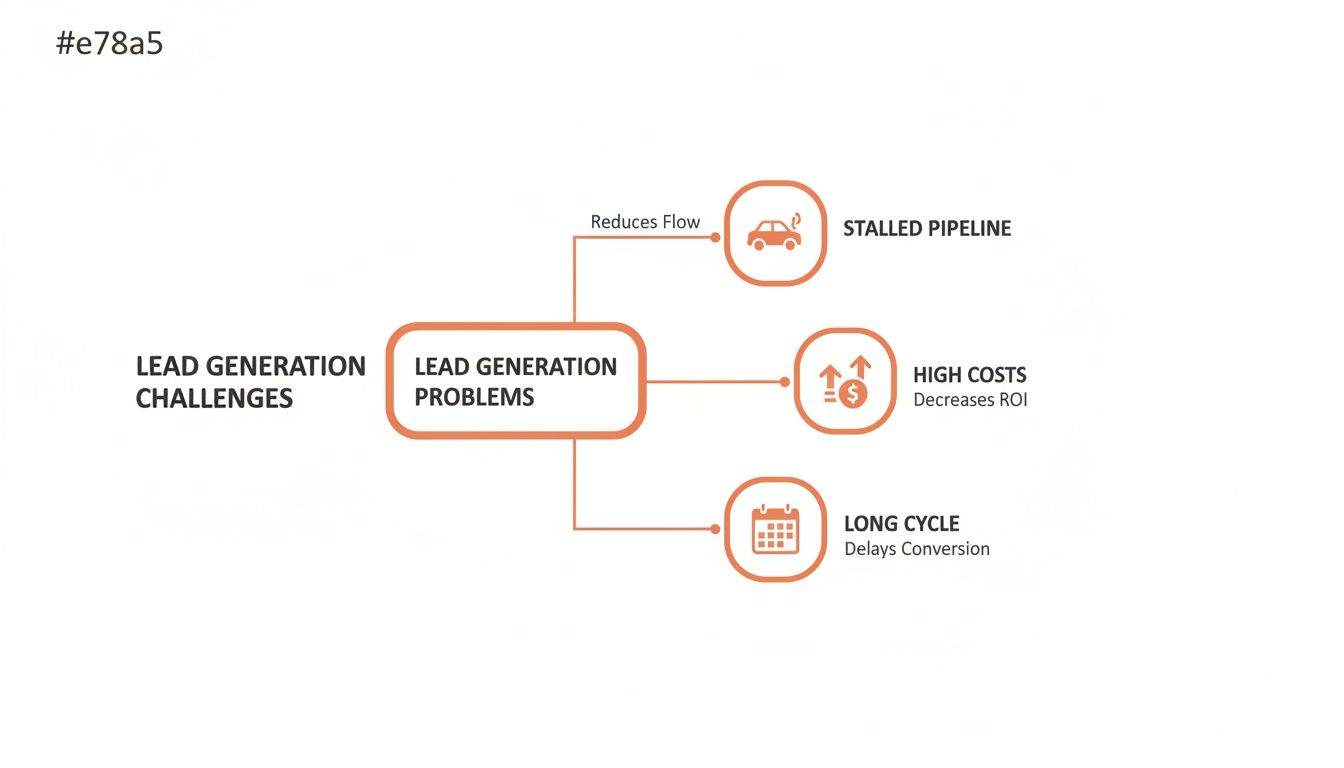
As you can see, stalled pipelines, rising acquisition costs, and painfully long sales cycles aren't just bad luck. They're symptoms of a disconnected or outdated lead generation strategy. A modern, integrated playbook is the cure.
Inbound: Getting Qualified Leads to Come to You
Inbound marketing is about earning attention, not renting it. The goal is to create valuable content that attracts your ideal customers when they're actively searching for solutions. It’s a "pull" strategy that builds your reputation as a trusted authority.
An effective agency focuses on activities that signal high purchase intent:
- High-Intent SEO: This isn't about ranking for vanity keywords. It’s a focused effort to capture traffic from searches that indicate a user is ready to buy, like "best CRM for small law firms" or "salesforce integration services." These long-tail keywords have much higher conversion rates.
- Valuable Gated Content: Offer assets like whitepapers, e-books, exclusive webinars, and original research. For example, a fintech company could offer a report on "Automating AP for Higher Margins" to attract CFOs. You provide value, and they provide contact info.
- Landing Page Conversion Rate Optimization (CRO): Getting traffic is step one; converting it into leads is what matters. A skilled agency will A/B test headlines, calls-to-action, form length, and social proof to maximize conversions. Smart tweaks can often boost rates by 20% or more.
An inbound lead has raised their hand and said, "I'm interested." Because they initiate contact, these leads tend to move through the sales process faster and close at a higher rate.
Outbound: Proactively Starting the Right Conversations
While your inbound engine captures active searchers, your outbound strategy proactively targets a hand-picked list of perfect-fit customers who may not know you exist yet.
This is not spam. It's about starting relevant, personalized conversations. Here’s what that looks like in practice:
- Personalized Multi-Touch Email Campaigns: Modern outbound uses a carefully timed sequence of emails tailored to the prospect’s role, company, or industry challenges, giving them a compelling reason to respond.
- Strategic LinkedIn Outreach: With over 89% of B2B marketers on LinkedIn, it's a goldmine. Success comes from engaging with a prospect's posts, finding common ground, and sending a thoughtful InMail that speaks directly to their business priorities. Ezca's work in B2B LinkedIn lead generation demonstrates how powerful a well-executed strategy can be.
- Data-Driven Cold Calling: "Cold calling" today is a strategic, data-informed effort. Sales development reps (SDRs) are armed with deep insights about a prospect before calling. The goal is to qualify interest and book a meeting, not to force a sale.
By combining the magnetic pull of inbound with the precision of outbound, an experienced agency builds a robust, predictable lead generation engine.
How B2B Lead Generation Agencies Structure Their Pricing
One of the first questions every business leader asks is: "What's this going to cost?" There's no single price tag for a B2B lead generation agency, and understanding the different models is key to finding a partner that fits your budget, goals, and risk tolerance.
Let's break down the most common pricing models—the pros, cons, and what you can expect to pay.
Monthly Retainer
The monthly retainer is the classic model. You pay a fixed fee every month for a dedicated team, a defined scope of work, and access to their technology stack.
- Pros: This model fosters a deep, long-term partnership where the agency becomes an extension of your team. It also provides budget predictability.
- Cons: The fee is fixed regardless of performance, requiring significant upfront trust. It's less ideal for businesses needing guaranteed results from day one.
- Cost Benchmark: Quality B2B lead gen agency retainers typically range from $5,000 to $25,000+ per month, depending on the scope of work, team size, and market competitiveness.
Pay-Per-Lead (PPL) or Pay-Per-Appointment
On the surface, a PPL model seems like a low-risk dream: you only pay for a specific result, like a qualified lead or a booked meeting.
However, the definition of a "lead" is critical. Without a rock-solid, mutually agreed-upon definition, you risk paying for a list of lukewarm contacts that waste your sales team's time. This model often incentivizes the agency to chase volume over value.
Actionable Insight: A "lead" can be a Marketing Qualified Lead (name and email) or a Sales Qualified Lead (a vetted decision-maker who requested a demo). You must get this definition in writing before signing a contract.
Performance-Based Hybrids
Hybrid models combine a smaller monthly retainer with a performance-based bonus. You pay a base fee plus a "kicker" for hitting specific goals, like a target number of Sales Qualified Leads (SQLs) or even revenue from closed deals.
- Pros: This creates a "we're in this together" dynamic. The agency's financial success is directly tied to delivering results that impact your revenue.
- Cons: Structuring and tracking these deals can be complex, and performance bonuses can make monthly expenses unpredictable.
A Modern Alternative: The 90-Day Sprint Model
An agile approach gaining traction is the sprint model. Instead of a 12-month contract, the engagement is broken into focused, 90-day sprints, designed to deliver results fast and use data for continuous improvement.
This is how we operate at Ezca. Our squad-based sprint model provides a dedicated team focused on hitting clear, agreed-upon goals within that 90-day window. For example, we might start a sprint with a 60/40 budget split between LinkedIn Ads and outbound email. If after a few weeks, the data shows one channel is outperforming, we reallocate the budget immediately to double down on what’s working.
This approach gives you the intense focus of a project with the strategic thinking of a retainer, generating measurable pipeline without the risk of a long-term contract. It forces accountability and ensures your investment is always aimed at the tactics delivering the best ROI right now.
How to Vet and Shortlist Your Agency Partner
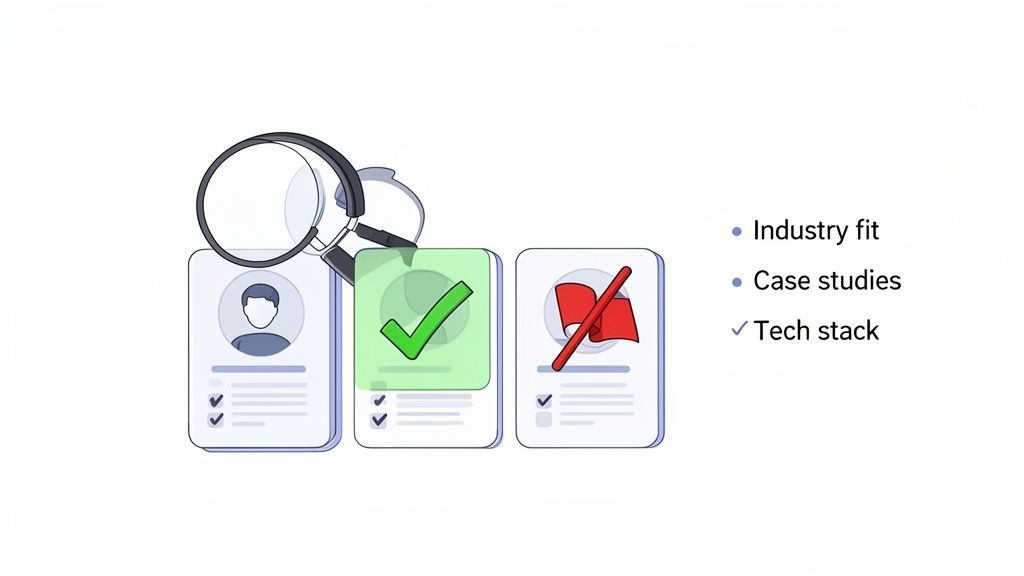
Finding the right B2B lead generation agency requires a clear evaluation process that cuts through slick sales pitches to focus on proven, real-world results. Your goal isn't to hire an agency; it's to find the right one.
Assess Their Industry and Niche Specialization
First, filter for agencies that already speak your language. A generalist understands marketing basics, but a specialist understands your industry, your buyers, and your unique challenges. For companies in complex or regulated fields, this is non-negotiable.
An agency that excels for manufacturing companies will have a different playbook than one that specializes in SaaS. Specialization means they won't be learning your industry on your dime. They arrive with proven strategies and an understanding of the buyer personas that matter to you.
As you begin your search, start with a broad list of the top lead generation companies and then narrow it down by looking for a proven track record in your specific vertical.
Scrutinize Case Studies for Measurable Results
Case studies are your best window into an agency's capabilities, but you must read them critically. Vague claims like “increased brand awareness” are red flags. Demand hard numbers that connect directly to business outcomes.
Here’s what to look for:
- Specific Metrics: Look for metrics that matter to your bottom line, like a 25% reduction in Cost per SQL or a 40% increase in demo requests.
- Clear Before-and-After: A great case study outlines the client’s problem, details the strategy used, and showcases the tangible results.
- Relevance to Your Goals: A success story from a company similar to yours is the strongest signal they can replicate that success for you.
If an agency can’t provide at least two or three detailed case studies with clear ROI, they likely lack the experience you need. Our guide on in-house vs. agency marketing can help clarify your needs.
Identify and Avoid Critical Red Flags
Knowing what to look for is as important as knowing what to avoid. Keep a sharp eye out for these warning signs:
- Unrealistic Guarantees: Any agency "guaranteeing" a specific number of leads or a certain amount of revenue is selling a fantasy. Look for agencies that promise a proven process and transparent reporting, not a magic number.
- Lack of Transparency: If an agency is cagey about their team, tools, or methods, walk away. A true partner is an open book.
- Reliance on "Spray and Pray" Tactics: Ask how they approach list building. If they talk about blasting massive, purchased email lists, you're looking at an outdated approach that will damage your brand's reputation.
Ask the Right Questions to Uncover True Expertise
Once you have a shortlist, it's time for interviews. These questions separate contenders from pretenders.
Here are a few essential questions to ask any potential B2B lead generation agency:
- How do you define a Sales Qualified Lead (SQL)? This is the most important question. Their definition must align perfectly with your sales team's criteria.
- What is your process for pivoting if a campaign underperforms? A data-driven agency will describe a clear system for monitoring performance and quickly shifting budget, often within a short sprint cycle.
- Who will be on our account team, and what is their experience? Ensure you'll be working with seasoned strategists, not junior account managers.
- What does your onboarding process look like, and how long until we can expect to see the first results? This question sets clear expectations for the critical first 90 days.
Measuring Real ROI with the Right KPIs
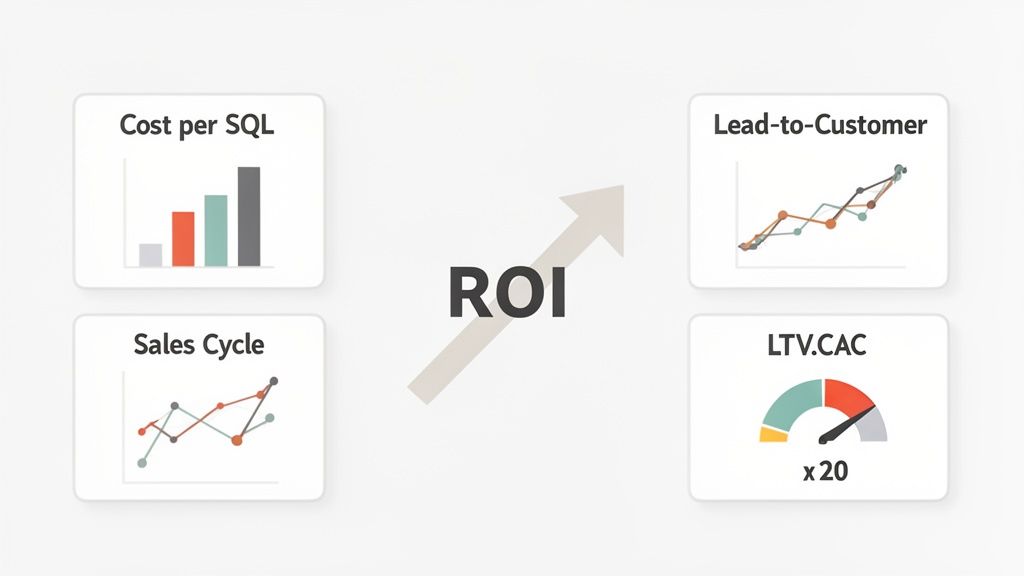
When you hire a B2B lead generation agency, you are making an investment. To measure the return, you must focus on key performance indicators (KPIs) that connect directly to your bottom line, not vanity metrics like traffic or likes.
These metrics provide the data to hold your agency accountable and justify the investment to your leadership team.
From Vague Metrics to Business Impact
A great agency shifts the conversation from "How many impressions did we get?" to "How much qualified pipeline did we generate this quarter?" This aligns everyone on the ultimate goal: driving tangible business growth.
To get a clear picture of your agency's performance, you need to track a handful of essential KPIs.
Essential B2B Lead Generation KPIs
Tracking these metrics gives you a 360-degree view of your program's health, from initial cost to long-term profitability.
Digging into the Core KPIs
Your Cost per Sales Qualified Lead (SQL) is the true cost of getting a sales conversation. If an agency spends $10,000 in a month and produces 20 SQLs, your Cost per SQL is $500. This is infinitely more valuable than a generic CPL.
The Lead-to-Customer Conversion Rate is a direct reflection of lead quality. A strong rate (e.g., 1-3% in B2B) shows the agency is delivering prospects with real intent. A low rate may signal poor lead quality or a breakdown in your sales process.
Sales Cycle Length tells you how efficiently you're turning leads into revenue. When an agency delivers high-intent, nurtured prospects, this timeline should shrink.
But the single most important metric is the LTV:CAC ratio. A healthy B2B company should aim for a ratio of at least 3:1—for every dollar spent to acquire a customer, you get at least three dollars back. A skilled agency focuses on delivering high-value customers, not just cheap leads.
By monitoring these KPIs, you can clearly measure the ROI your B2B lead generation agency is delivering. This data justifies the budget and informs smarter strategic moves, like using predictive scoring to refine lead quality, a tactic Ezca used to drive better outcomes as detailed in this SaaS predictive lead scoring case study.
A Modern Approach: The 90-Day Sprint Model
Traditional, long-term agency contracts are a liability in a market where priorities can change quarterly. A rigid 12-month plan is too inflexible for modern business needs.
This is where a more agile framework comes in—the 90-day sprint model. This approach provides the flexibility business owners and marketing leaders need to get results. Each sprint is a self-contained, 90-day project designed to hit specific, measurable goals, creating discipline, accountability, and a relentless focus on what's working right now.
For a B2B lead generation agency, this model replaces vague promises with concrete deliverables. It empowers the agency to act on real-time data instead of waiting for a quarterly review to make changes.
The Power of the Squad Model
This sprint-based approach works best when paired with a "squad model." Instead of a single, overworked account manager, you get a dedicated, cross-functional team of specialists who become an extension of your own team.
A typical B2B lead generation squad includes:
- A Strategist: To ensure campaign alignment with business goals.
- A Paid Ads Specialist: To run and optimize campaigns on platforms like LinkedIn and Google Ads.
- An SEO & Content Expert: To drive organic traffic and capture high-intent leads.
- A Sales Development Rep (SDR): To handle personalized outbound outreach and qualify leads.
This is the exact structure we use at Ezca, ensuring you always have the right expert for every task. It closes knowledge gaps and builds a collaborative engine focused solely on filling your sales pipeline.
Agility in Action: A Real-World Scenario
The magic of the sprint model is its built-in agility. Budgets are fluid and can be reallocated weekly based on performance data, allowing your agency to double down on what’s working with incredible speed.
Here's a real-world example: A B2B SaaS client selling project management software to enterprise construction firms. We kick off a 90-day sprint with this initial budget:
- 60% for LinkedIn Ads targeting Project Managers and VPs of Operations.
- 40% for SEO-driven content, like a whitepaper on "Reducing Project Overruns by 15%."
After three weeks, the data shows the LinkedIn campaign is on fire, bringing in SQLs at a 30% lower Cost per Acquisition (CPA) than projected.
In a traditional model, you might wait until the end of the quarter to discuss this. In our sprint model, we act immediately. The next week, we shift the budget to a 75/25 split, pouring more resources into the high-performing LinkedIn campaign.
This data-driven agility is the core of effective performance marketing, ensuring every dollar is guided toward the highest possible return. This dynamic approach is a key reason why Ezca has successfully generated over 200,000 qualified leads for top brands from startups to HubSpot and Stripe. It’s a modern partnership built for measurable growth.
Answering Your Top Agency Questions
If you're considering hiring a B2B lead generation agency, you likely have a few key questions. Let's get straight to the answers.
How Long Does It Take to See Results?
Anyone promising a flood of leads overnight is unrealistic. A realistic timeframe to build a reliable lead generation engine is 90 days.
The first month is foundational: onboarding, strategy, tech setup, and list building. Month two is for campaign launch and initial data collection for optimization. By month three, momentum builds, and you should see a consistent flow of qualified leads and have enough data to forecast reliably.
Lead Gen vs Demand Gen What Is the Difference?
It’s easy to confuse these two concepts. A simple fishing analogy clarifies the difference:
- Lead Generation is like casting a line where you know fish are biting. It's a bottom-of-funnel activity targeting buyers actively seeking a solution now. The goal is to capture intent and book sales meetings (SQLs, demos).
- Demand Generation is like chumming the water to attract fish. It's a broader, top-of-funnel strategy focused on educating the market and building brand trust over time. You're creating future buyers, so they think of you first when they are ready.
A great agency understands both but focuses on turning existing intent into measurable pipeline.
How Much Work Is Required From My Internal Team?
Hiring an agency is a partnership, not a "set it and forget it" service. Your team's involvement is most critical during onboarding, where your expertise on your Ideal Customer Profile (ICP) and sales process is invaluable.
After launch, the most important contribution is providing consistent feedback on lead quality. A quick, weekly 30-minute sync to review which leads were good, which weren't, and why is essential. This feedback loop is what allows an agency to refine targeting and drive better results each week.
Actionable Insight: An agency can't—and shouldn't—guarantee a specific number of leads. What they should guarantee is a battle-tested process and complete transparency. A predictable system that delivers consistent opportunities is infinitely more valuable than a hollow promise of X leads per month.
Ready to stop guessing and start building a predictable pipeline? At Ezca, our data-driven, 90-day sprint model is designed to deliver measurable B2B lead outcomes, fast. See how our squad-based approach can fill your sales team's calendar by visiting https://ezcaa.com.