
SEO for Professional Services Firms: Your 90-Day SEO
Get a 90-day playbook on SEO for professional services firms. Learn to plan, implement & measure SEO to generate qualified B2B leads.

A lot of professional services firms are stuck in the same loop. They paid for a polished website, wrote a few generic service pages, published occasional articles, and waited for qualified leads that never came. Traffic is weak, inquiries are vague, and the sales team keeps saying the best opportunities still come from referrals.
That usually isn’t a brand problem. It’s an SEO system problem.
Professional buyers don’t hire the first firm they see. They compare options, check credibility, read service pages closely, and look for signs that a firm understands their exact problem. SEO for professional services firms has to support that buying behavior. It has to attract the right searcher, build trust fast, and move them into a measurable pipeline.
At Ezca, we treat SEO as a 90-day sprint built around lead quality, not vanity metrics. That means fixing the technical foundation first, building authority assets second, and tightening lead capture and attribution before the sprint ends. If you skip any one of those, the channel underperforms.
Why Generic SEO Fails Professional Services
The common failure pattern is easy to spot. A law firm, consultancy, or accounting practice launches a site that looks expensive and says all the right things. Then the search strategy gets outsourced to a generic SEO playbook built for e-commerce. The agency targets broad keywords, stuffs a few blog posts into the calendar, and reports on impressions.
The result looks busy but doesn’t produce qualified pipeline.

Professional services SEO breaks when marketers ignore trust, specificity, and sales friction. A buyer searching for an accountant, consultant, or legal advisor isn’t browsing like a consumer shopping for a low-risk product. They’re evaluating expertise, fit, and credibility. That means generic traffic is often worthless.
The upside is large when the strategy is done correctly. Businesses investing in SEO typically achieve $22 return for every dollar spent, and professional services SEO leads have a 14.6% close rate versus 1.7% for outbound leads, according to The SpearPoint analysis of SEO for professional services. That gap is why a weak SEO program is more than a missed ranking opportunity. It’s a lost revenue channel.
What generic SEO gets wrong
Most underperforming campaigns make the same mistakes:
- They chase volume over intent. Broad keywords bring visitors who aren’t ready to buy and often aren’t even a fit.
- They write content with no point of view. Thin articles don’t show expertise and don’t help buyers evaluate your firm.
- They ignore local and service relevance. A regional firm needs location depth, not national vanity traffic.
- They report activity instead of outcomes. Rankings and sessions don’t tell you whether the channel is producing real sales conversations.
Practical rule: If your SEO report doesn’t show which pages generated qualified inquiries, you don’t have a growth system. You have publishing activity.
A lot of firms also underestimate local intent. For practices that serve defined geographies, this matters more than most agencies admit. The framework in Local SEO for Service Area Businesses is worth reviewing because it focuses on the realities of location-based visibility instead of generic national SEO advice.
The model that works better
The right model is narrower and more disciplined. Start with service lines you want to sell. Map those services to high-intent search themes. Build pages that answer buyer questions clearly. Then connect that traffic to lead qualification and CRM reporting.
That’s the same operating logic strong B2B teams use elsewhere. If you already think in terms of pipeline quality, sales velocity, and revenue attribution, SEO should be managed the same way. A good reference point is how B2B marketing programs are structured around measurable growth, not disconnected traffic goals.
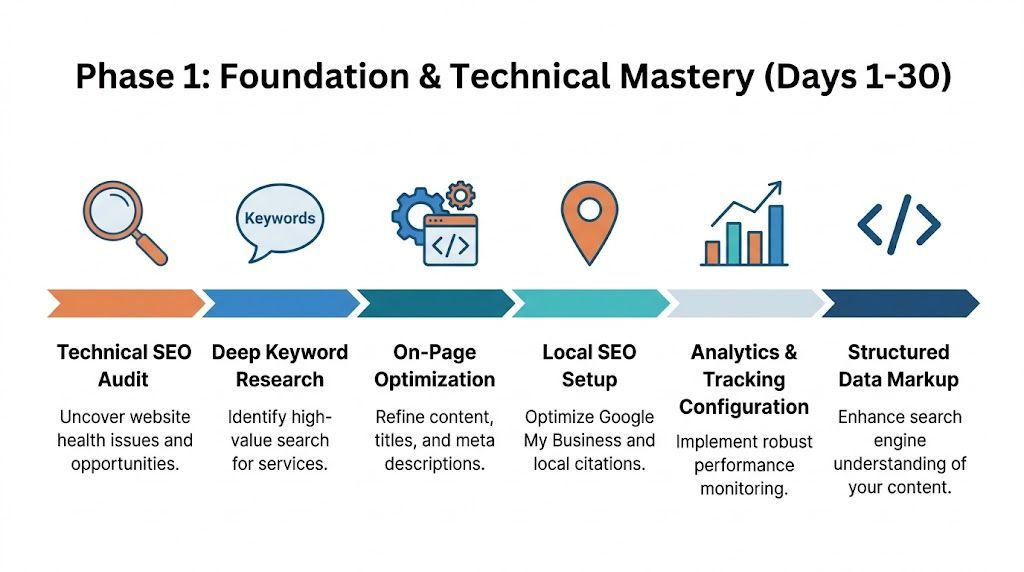
Phase 1 (Days 1-30) Foundation and Technical Mastery
The first month is where most firms either create momentum or bury future results under technical debt. This phase is unglamorous. It’s also where qualified lead generation starts.
A technically weak site can’t support a serious SEO program. If search engines struggle to crawl pages, users hit slow templates, or core service pages are buried under bad architecture, content won’t rescue you.
Start with a real audit, not a plugin scan
Use tools that can surface structural issues across the full site. Screaming Frog, Semrush Site Audit, and Google Search Console are the standard stack for this phase. You’re not looking for a vanity health score. You’re looking for the pages, templates, and site-wide rules that are suppressing performance.
A thorough audit can uncover 100+ issues, and post-audit optimization tied to crawl fixes and performance work can produce traffic increases of 500-1100%, with professional services firms seeing double the conversions from technically sound pages, as noted in Search Engine Journal’s breakdown of the SEO audit process.
What gets reviewed first:
- Crawl errors and broken paths Check 404s, redirect chains, orphan pages, and internal links pointing to retired URLs.
- Indexation control Thin pages, duplicate archives, and accidental noindex rules often block important assets or dilute authority.
- Core Web Vitals and page speed INP matters here. So does layout stability and mobile experience.
- HTTPS and canonical consistency Mixed versions of the same page create confusion for search engines and users.
- Schema and service clarity Service and LocalBusiness markup help search engines understand what the firm does and where it operates.
Fast fixes feel satisfying. Root-cause fixes generate results.
The pages to fix first
Don’t spread effort evenly across the entire site. Prioritize pages that sit closest to revenue:
A lot of firms waste the first month rewriting blog posts that don’t matter yet. Fix the commercial layer first.
Prune before you publish
Many professional services sites accumulate low-value content over time. Old announcements, thin blogs, duplicate insights, outdated service fragments, and low-relevance pages can clog the crawl path and confuse topic relevance.
Pruning is often more valuable than publishing in the first month. Review GA4, Search Console, and crawl data together. If a page doesn’t support a service line, a location strategy, a trust signal, or an active keyword cluster, it should be merged, redirected, rewritten, or removed.
That cleanup does two things. It clarifies site focus for search engines, and it makes internal linking more intentional.
Rebuild on-page basics properly
This part sounds obvious, yet it’s usually sloppy.
Every priority page needs a unique title tag, a clear meta description, one focused H1, sensible H2 and H3 structure, and internal links that reinforce the service cluster around it. A service page shouldn’t try to rank for every adjacent topic. It should own one core intent and connect to supporting pages naturally.
A practical checklist for commercial pages:
- Title tags should lead with the primary service phrase and stay concise.
- Meta descriptions should explain the commercial value of the page, not repeat generic brand copy.
- Headings should reflect the buyer’s decision path, not the designer’s preference.
- Internal links should connect service, industry, location, and proof pages into a usable cluster.
- Calls to action should match buyer readiness. “Talk to an expert” often works better than aggressive sales language.
For firms that want a benchmark for what a structured engagement looks like, this is the discipline behind serious SEO services for growth-focused companies.
Build the architecture around buyer intent
Keyword research in professional services has to start with commercial reality. Search volume matters less than fit.
Separate terms into four buckets:
- Direct service intent Searches for the exact service your firm sells.
- Problem-aware intent Searches that signal pain, compliance need, operational risk, or strategic need.
- Comparison intent Searches where buyers are evaluating options, costs, providers, or approaches.
- Local or regional intent Searches that combine service with geography or jurisdiction.
Then design the site around those themes. The strongest setup is usually a hub-and-spoke structure. Service hubs sit at the center. Supporting pages answer adjacent questions, explain use cases, and cover industry or location nuances.
Configure tracking before content scales
If you wait until month three to define conversions, you’ve already lost useful data.
Set up GA4 events, Search Console, CRM source fields, and form tracking in the first month. Track calls, form submissions, booked consultations, and any qualification step that matters. Use consistent naming across analytics and CRM so SEO-sourced leads can be reviewed against closed business later.
The point isn’t reporting cleanliness for its own sake. The point is being able to answer a hard question at the end of the sprint: which pages brought in conversations worth having?
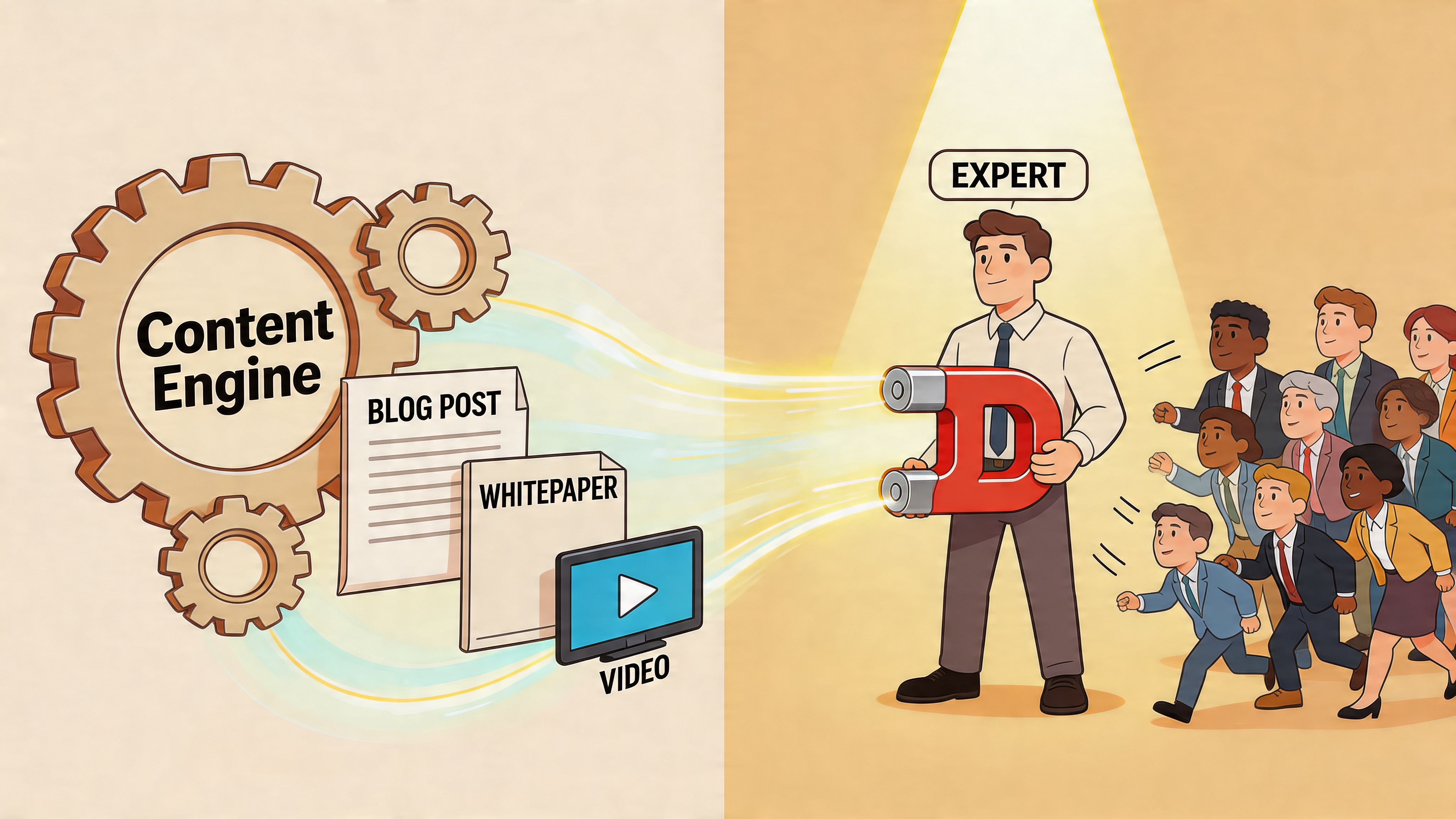
Phase 2 (Days 31-60) The Content and Authority Engine
The second month is where most firms get distracted. They know they need content, so they publish random articles pulled from keyword tools and call it thought leadership. That approach rarely works for seo for professional services firms because it confuses activity with authority.
Authority is built when the site shows depth around the exact problems buyers need solved.
Build topic clusters around real buyer questions
The fastest way to produce useless content is to let SEO tools choose the editorial calendar. The better input comes from sales calls, discovery notes, proposal objections, and client onboarding questions.
If prospects keep asking the same things, those themes belong in the content engine. They often map to high-intent search behavior better than broad industry terms.
A simple way to structure the engine:
This is also where internal links start compounding. A core service page should point to supporting content that answers adjacent objections. Those supporting articles should link back to the service page and to related proof assets.
What thought leadership actually means
Most firms misuse that phrase. Thought leadership doesn’t mean publishing vague opinions on industry trends. It means turning the firm’s internal expertise into useful, searchable assets that a buyer can evaluate.
That usually includes:
- Explainers that break down complex service areas in plain English
- Decision guides that help buyers understand options and trade-offs
- Articles with a point of view based on lived client work
- FAQ pages written from actual sales conversations
- Industry-specific pages that prove contextual understanding
The strongest content often starts with a subject matter expert talking through a real issue for twenty minutes. Then a strategist shapes that into a structured article with search intent, internal links, and a conversion path.
A good companion read on scaling this work is how to increase organic traffic, especially if your team needs a better publishing system instead of more random output.
Buyers don’t trust firms because they publish often. They trust firms because the content sounds like it came from people who’ve solved the problem before.
Case studies need narrative, not bragging
A weak case study reads like a press release. A strong one helps the buyer see themselves in the problem.
Use a simple narrative structure:
- The client situation What was broken, risky, inefficient, or unclear?
- The stakes Why did the issue matter to leadership, operations, compliance, or revenue?
- The approach What did the firm do? Keep this practical, not self-congratulatory.
- The outcome Use qualitative business impact if hard numbers can’t be shared.
- Why it matters for similar buyers Connect the story back to a broader use case.
This kind of content ranks, but it also effectively sells. It shortens the trust-building phase because the buyer can see evidence of competence before they ever book a call.
Don’t publish without an authority map
An authority map keeps month two from turning into content sprawl. Build it around three layers:
- Primary themes linked to your highest-value services
- Supporting subtopics tied to objections, pain points, or adjacent needs
- Proof assets such as case studies, team bios, certifications, speaking appearances, and methodology pages
That map helps you spot missing assets. A firm may have a strong service page but no proof. Or useful blog content but no industry landing page. Or expert bios with zero links to related services.
The authority engine works when all those pieces reinforce one another.
Here’s a useful training resource if your team needs a practical outside perspective on content presentation and search visibility before recording expert-led assets:
Editorial standards that actually help rankings
Content quality in professional services isn’t about sounding polished. It’s about reducing uncertainty.
Use these editorial rules:
- Name the audience clearly. Write for the buyer, not for everyone who could theoretically read the page.
- Explain trade-offs. Buyers trust content that admits complexity.
- Show process. Professional services are often intangible. Process makes the value more concrete.
- Avoid template intros. Get to the issue quickly.
- Add author context. The content should feel connected to real practitioners.
What’s a waste of time in month two
Teams burn hours on this:
- Publishing generic trend posts with no service relevance
- Writing for empty-volume keywords that don’t map to pipeline
- Outsourcing all expertise to junior writers with no SME input
- Building giant content calendars before validating page templates and conversion paths
- Obsessing over word count instead of buyer usefulness
If a piece can’t support trust, rankings, or lead qualification, it shouldn’t be in the sprint.
Phase 3 (Days 61-90) Amplification and Lead Capture
By the third month, the site should be technically stable and the content engine should be producing assets worth promoting. This phase decides whether the first two months become pipeline or just a cleaner website.
The work splits into two tracks. First, increase the reach and credibility of your best pages. Second, make sure those pages convert when the right visitor arrives.
Earn authority from places buyers already trust
Professional services firms shouldn’t use spammy link-building tactics. Directory blasts, low-quality guest posts, and irrelevant outreach create noise, not authority.
Useful off-site signals usually come from real-world credibility translated into search visibility. That includes contributed articles, commentary in niche publications, speaking recaps, association mentions, podcast appearances, and partnerships with respected organizations.
The outreach question is simple: where would an ideal buyer reasonably encounter your expertise?
A practical prioritization model:
- Industry publications that your prospects already read
- Professional associations tied to your field or region
- Niche podcasts and newsletters with relevant operator audiences
- Partner ecosystems where your service complements another offer
- Local business publications if geography matters to the firm
If your team wants a useful outside perspective on outreach and client acquisition positioning, this how to get consulting clients resource is a solid example of thinking beyond passive website publishing.
The best links in professional services usually come from visible expertise, not from link schemes.
Tighten conversion paths on money pages
A lot of firms assume that if a page ranks, the phone will ring. It doesn’t work like that. Commercial pages need explicit conversion design.
Start by reviewing the top service pages and asking four questions:
- Is the page immediately clear about who it helps?
- Does it reduce risk with proof, specificity, and process?
- Is there a next step for different levels of readiness?
- Is the form or contact path frictionless?
Many professional services sites make the same CRO mistakes:
- The CTA appears too late
- The page says what the firm does, not what the buyer gets
- There’s no visible proof near the form
- Forms ask for too much too soon
- Every page pushes the same generic “contact us” ask
A better pattern is to offer multiple conversion paths. Some visitors are ready to speak. Others want a guide, a checklist, or a scoped consultation. High-consideration buyers often need one intermediate step before they become a sales conversation.
Improve local capture for firms with geography-based demand
For local and regional firms, Google Business Profile optimization often influences whether high-intent searchers ever reach the site.
The essentials are straightforward:
- Keep service categories accurate
- Match contact details across listings
- Use service descriptions that reflect actual offers
- Publish updates when relevant
- Collect reviews through a consistent operational process
- Connect the profile to strong location pages on the site
This work is often neglected because it looks operational rather than strategic. That’s a mistake. In many professional services categories, map visibility and localized trust signals play a meaningful role in inquiry quality.
Match lead magnets to real buying friction
Lead magnets still work when they help buyers make a decision. They fail when they exist just to collect email addresses.
Good offers in this category include:
The key is alignment. If the page addresses a complex service decision, a lightweight checklist can move the visitor forward. If the page targets direct commercial intent, adding another content gate may only delay conversion.
End the sprint with page-level decisions
By day 90, every important page should fall into one of three buckets:
- Keep scaling it because it’s attracting the right traffic and generating useful actions
- Rewrite it because the traffic exists but engagement or conversion quality is weak
- Consolidate or retire it because it doesn’t support the strategy
This is also the right moment to compare qualitative lead feedback with on-site behavior. If sales says leads from a topic area are weak, inspect the queries, landing pages, and offers attached to that cluster. Usually the issue is visible in the page intent.
Running Your Next Sprint and Measuring True ROI
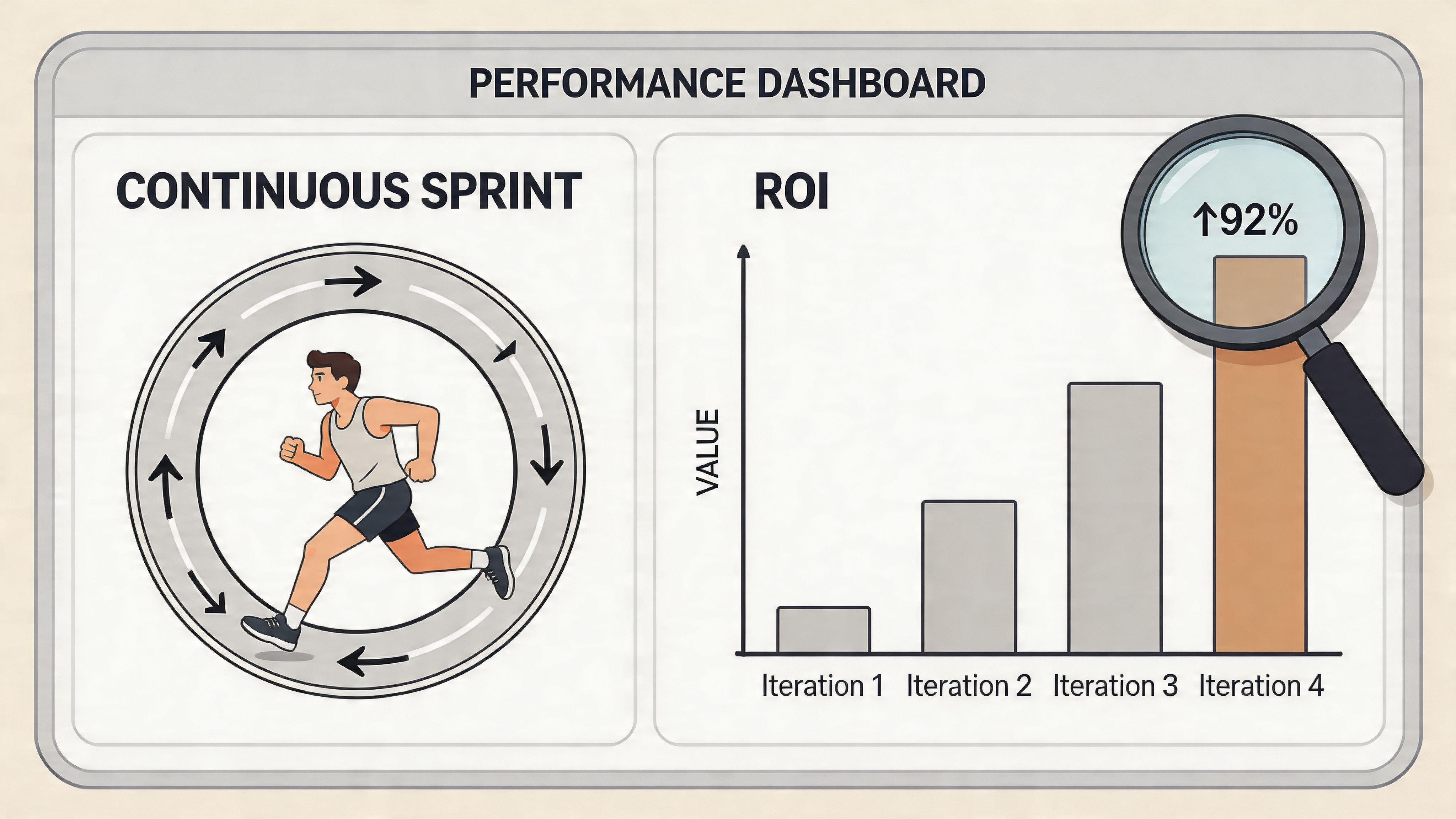
Most SEO programs fail at the point where leadership asks the obvious question. Did this generate revenue, or did it just generate reports?
That gap is especially common in professional services. Most content on professional services SEO fails to provide frameworks for quantifying how efforts convert to client acquisition and lifetime value, and that gap matters for B2B firms that need to justify spend against paid channels within timelines like a 90-day sprint, as explained in Paradigm Marketing and Design’s discussion of professional services SEO.
Stop treating traffic as the finish line
Traffic is useful context. It isn’t the KPI that matters most.
For seo for professional services firms, the metrics that matter are closer to revenue:
- Qualified leads generated from organic search
- Lead-to-meeting rate
- Meeting-to-opportunity rate
- Opportunity quality by service line
- Closed business influenced by organic entry pages
- Time from first organic visit to sales conversation
That requires connecting systems. GA4 alone won’t tell you enough. Search Console won’t tell you enough. Your CRM won’t tell you enough unless source data is clean.
The better setup is an integrated view where landing page, conversion event, lead status, pipeline stage, and revenue outcome can be reviewed together. Without that, you’ll keep debating SEO based on partial evidence.
Use attribution that fits long sales cycles
Professional services buying journeys are rarely single-session events. A prospect may discover the firm through search, return through direct traffic, read another article later, and convert after a referral or internal discussion.
That means last-click reporting often understates SEO.
A practical operating model includes:
This doesn’t have to become a data science project. It just needs discipline. Capture source data cleanly. Keep form fields consistent. Make sure sales updates lead status. Review outcomes by landing page and topic cluster, not just by channel total.
SEO should earn budget the same way paid media does. By showing which investment produced qualified pipeline.
What to review before the next 90 days
At the end of the sprint, review performance in three groups.
Winners are pages and clusters that brought in relevant traffic and moved leads forward. Expand those. Add supporting content. Improve internal links. Strengthen CTAs.
Near misses are pages that rank or attract visits but don’t convert well. These usually need sharper messaging, better offers, stronger proof, or clearer qualification.
False positives are assets that look good in traffic reports but produce poor-fit inquiries or no commercial movement. Don’t protect them because they rank. Cut or reposition them.
A useful review framework:
- Search demand matched the offer
- The page matched the visitor’s real intent
- The page created trust
- The CTA matched readiness
- The lead entered the CRM with usable attribution
- Sales feedback confirmed fit
Where AI helps and where it doesn’t
AI can accelerate research, content structuring, SERP analysis, internal linking suggestions, and reporting cleanup. It helps teams move faster through repetitive work.
It does not replace strategic judgment. It won’t know which service line has the strongest margins, which objections kill deals, or which lead source your sales team trusts. Those are operator decisions.
The firms getting the most from modern SEO use AI to reduce production drag, then let strategists and subject matter experts handle positioning, proof, and prioritization. That’s how a sprint stays fast without turning generic.
The next sprint should feel narrower, not bigger
A strong first sprint gives you permission to be more selective. Double down on service lines with traction. Build deeper authority where lead quality is strongest. Cut themes that bring the wrong buyers.
That’s how SEO becomes a reliable acquisition channel instead of a rolling content subscription.
If your team wants a partner that runs SEO, CRO, content, and attribution as one performance system, Ezca Agency is built for that. We work in focused 90-day sprints for B2B, SaaS, and e-commerce brands that need measurable growth, cleaner reporting, and a direct line from traffic to qualified pipeline.