
B2B Ecommerce Example: Top Tactics from Leading Platforms
Explore our B2B ecommerce example breakdown. Learn how Amazon, Grainger & McMaster-Carr drive growth with tactics you can use for your platform.
B2B eCommerce now operates at a scale large enough to reshape how companies buy, compare, and reorder. The strongest b2b ecommerce example reflects that shift by reducing procurement friction across search, pricing, approvals, and replenishment.
Buyer expectations have changed with it. Business customers expect account-specific pricing, approval workflows, self-service reordering, order tracking, and integrations that match existing purchasing processes. Companies that convert well online are not publishing digital catalogs. They are building buying systems that lower effort for every stakeholder involved in the order.
That change has direct implications for growth teams. SEO brings in category and product demand. CRO turns technical traffic into completed orders. Pricing presentation, inventory visibility, and backend workflows determine whether that demand converts once buyers arrive. Teams running across marketplaces, direct channels, and distributor relationships can also borrow tactics from this guide to multi-channel marketing strategy for modern eCommerce brands.
The seven companies in this analysis are useful for a reason. Each one wins through a different operating model, and the interesting lesson is not the feature list. It is the commercial logic underneath. Amazon Business reduces procurement complexity at enterprise scale. McMaster-Carr compresses time-to-purchase for technical buyers. Digi-Key uses structured product data to capture high-intent search and support specification-driven conversion. For teams evaluating Amazon-adjacent infrastructure, API of Amazon for eCommerce Teams adds helpful context on how marketplace data and workflows connect to execution.
Read these examples as tactical breakdowns, not brand profiles. The goal is to identify the SEO patterns, CRO choices, pricing mechanics, and operational decisions that other B2B marketers can apply.
1. Amazon Business
Amazon Business matters because it reset buyer expectations at scale. According to the e-commerce timeline entry covering Amazon Business, the platform launched on January 12, 2017, hit $1 billion in sales within six months, and scaled to $25 billion in annualized revenue by 2021. That speed tells you something important. The market wasn’t waiting for another catalog. It was waiting for a better buying workflow.
The platform’s direct site is here: Amazon Business for enterprise buying.
Why the model works
Amazon Business brought consumer-grade usability into B2B without stripping out enterprise controls. The key features are multi-user accounts, approval workflows, business-only pricing, buying policies, and spend visibility. Those capabilities matter because B2B purchasing rarely involves a single buyer acting alone.
The strategic move wasn’t just feature expansion. It was UX translation. Amazon took familiar search, filtering, reorder behavior, and account management, then layered procurement controls on top. That reduced training cost inside customer organizations and shortened the path from first order to repeat order.
Amazon Business didn’t win by teaching buyers a new behavior. It won by adapting an old behavior to a business context.
The SEO and CRO lesson
Amazon’s marketplace scale gives it obvious advantages, but the deeper lesson is about intent capture. B2B buyers searching for routine supplies, replacement parts, and tail-spend items often want speed over consultation. Amazon Business aligns tightly with that intent.
Three replicable plays stand out:
- Reduce policy friction: Approval routing and buying controls keep decentralized purchasing from becoming chaos.
- Design for repeat purchasing: Reorder behavior, account persistence, and shared business accounts support long-term retention.
- Use integrations as conversion assets: Procurement integrations aren’t backend plumbing. They remove objections during evaluation.
If your team sells through multiple acquisition channels, channel strategy proves vital. Amazon Business performs well because it meets buyers across search, marketplace demand, direct reorder behavior, and procurement systems. That’s the same logic behind multi-channel marketing for B2B growth teams.
Where marketers often misread it
Many brands look at Amazon Business and copy surface features. They add bulk discounts, business login options, or a procurement page. That’s not enough. Amazon’s real advantage is process compression. A buyer can search, validate, route for approval, and purchase in one environment.
That also explains why developers and operations teams care about connectivity. If your catalog, pricing, or inventory has to flow into another system, the technical layer becomes part of the conversion path. Teams evaluating that side of the model often start with the API of Amazon for eCommerce Teams.
The caution is straightforward. Broad catalog depth can create policy sprawl if account setup is sloppy. For sellers trying to compete, the lesson isn’t “be Amazon.” It’s “make one purchasing motion dramatically easier than the old way.”
2. W.W. Grainger
Grainger is a useful b2b ecommerce example because it shows what happens when an industrial distributor treats ecommerce as an operating system for revenue, not a digital brochure. Grainger launched online early, as noted earlier in the article, and the company’s long runway matters. It had time to build the less visible layers that industrial buyers care about most: account-specific pricing, repeat-order speed, procurement compatibility, and confidence in local availability.
Its core site is Grainger’s online industrial supply platform.
What Grainger gets right
Grainger wins on operational trust.
That sounds plain, but it has direct conversion value in MRO and industrial supply. Buyers often purchase under time pressure, inside approval rules, and with real failure costs attached to the wrong part or a delayed shipment. In that setting, the website has to do more than present SKUs. It has to reduce purchase risk at every step.
Grainger’s digital model reflects that reality. Account pricing supports negotiated relationships. Mobile workflows support field and facility buyers. PunchOut supports enterprise procurement behavior. Inventory programs like KeepStock extend the buying experience beyond the website into replenishment and stock planning. Together, those elements create a commerce system that is built for repeatability, not one-time persuasion.
The tactical teardown
The deeper lesson is in how Grainger balances discoverability with transaction speed.
Its category structure serves buyers who search by product class, part type, or urgent operational problem. That improves organic coverage for high-intent industrial terms and helps onsite search function more like a diagnostic tool than a simple catalog filter. At the same time, experienced customers can move quickly through account-based pricing, saved orders, and reorder paths without re-evaluating the whole catalog.
That combination supports two distinct growth loops:
- Known-item purchasing: Returning buyers use search, reorder flows, and account terms to compress time to purchase.
- Specification and repair discovery: Buyers investigating an issue can compare options, review technical details, and narrow choices without leaving the site.
Many industrial sellers build for one of those motions and weaken the other. Grainger captures more demand because it supports both in a single environment. That has SEO implications, CRO implications, and pricing implications. Informational and category-level traffic can enter through broad product discovery, while account structure and procurement features help convert high-value repeat buyers later.
Practical rule: If your buyers alternate between troubleshooting and replenishment, your site architecture should support both behaviors in the same journey.
What marketers can borrow
The transferable lesson is not “add more features.” It is “align the site with the commercial model.”
For manufacturers and distributors, that usually means treating ecommerce as part of account coverage. Pricing visibility, local branch logic, inventory messaging, and reorder design should reflect how the sales team serves customers offline. That is why many industrial brands need a more specialized B2B marketing strategy for industrial and distribution companies, especially when SEO, paid media, and CRO need to support contract-driven revenue rather than isolated cart conversions.
Grainger also shows a useful constraint. Its strongest digital economics likely come from customers with recurring demand, negotiated terms, and operational dependence on reliability. Smaller buyers can still purchase, but the full value of the model appears when ecommerce is connected to account structure, service layers, and repeat purchasing behavior.
That is the takeaway. Grainger did not win by making industrial ecommerce look modern. It won by making industrial purchasing easier to complete, easier to repeat, and easier to govern inside a business.
3. McMaster‑Carr
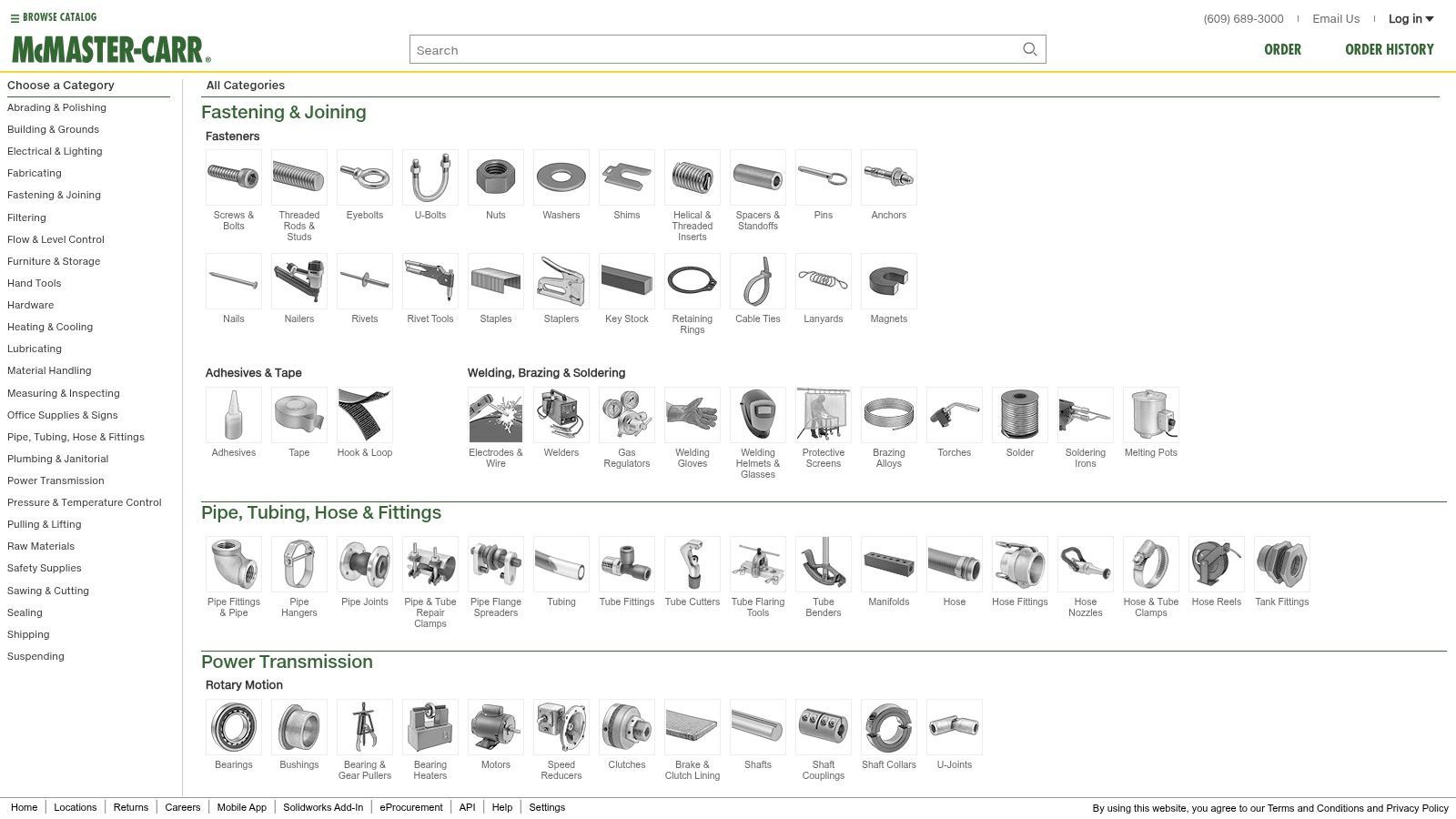
McMaster-Carr is the b2b ecommerce example I bring up when a team underestimates product data. The site doesn’t lead with lifestyle branding or heavy persuasion. It wins by helping engineers, maintenance teams, and technical buyers find the right part quickly, understand it immediately, and trust fulfillment.
Its platform is McMaster-Carr’s industrial catalog.
The hidden strategy is technical-user conversion
Most B2B teams still design around procurement personas and neglect technical influencers. That’s a mistake. A separate analysis on underserved technical users argues that these users often act as an extension of the sales team because they recommend products based on drawings, cut sheets, and specifications, yet many digital experiences still underserve them with weak product discovery and poor spec access. The source discussing that gap is this analysis of technical-user needs in B2B ecommerce.
McMaster-Carr addresses that gap better than most industrial sellers. Its product structure, filters, terminology, and downloadable technical resources reduce the number of questions an engineer has to ask before moving a product into consideration.
Why this matters for SEO and onsite search
Technical SEO in B2B isn’t just about ranking category pages. It’s about making machine-readable and human-readable product data work together. McMaster-Carr’s advantage comes from deep indexing of attributes that technical users care about, then exposing those attributes cleanly in navigation and product detail pages.
That creates two advantages at once:
- Higher-intent organic traffic: Specific long-tail queries can land on the right product or category context.
- Lower pre-purchase friction: Buyers don’t need to call sales for basic validation.
For many industrial brands, this is the missing middle between lead gen and ecommerce. They publish broad top-of-funnel content, but their product experience collapses under technical scrutiny.
Technical users don’t need more persuasion. They need fewer unknowns.
What to replicate without copying the whole model
You don’t need McMaster-Carr’s scale to borrow its principles. Start with your product data model. If your most valuable buyers use dimensions, tolerances, materials, fitment data, drawings, or compatibility criteria, those fields should shape navigation, faceted search, schema strategy, and onsite filters.
The commercial payoff is broader than conversion. Better technical content also reduces support load, makes paid search landing pages more relevant, and improves quote quality when buyers do escalate to sales.
McMaster-Carr also signals a pricing lesson. It’s not trying to win on bargain positioning alone. The offer is speed, confidence, and usability. For many B2B sellers, especially in urgent replacement or engineering workflows, that value proposition protects margin better than racing to the bottom on price.
4. Digi‑Key Electronics
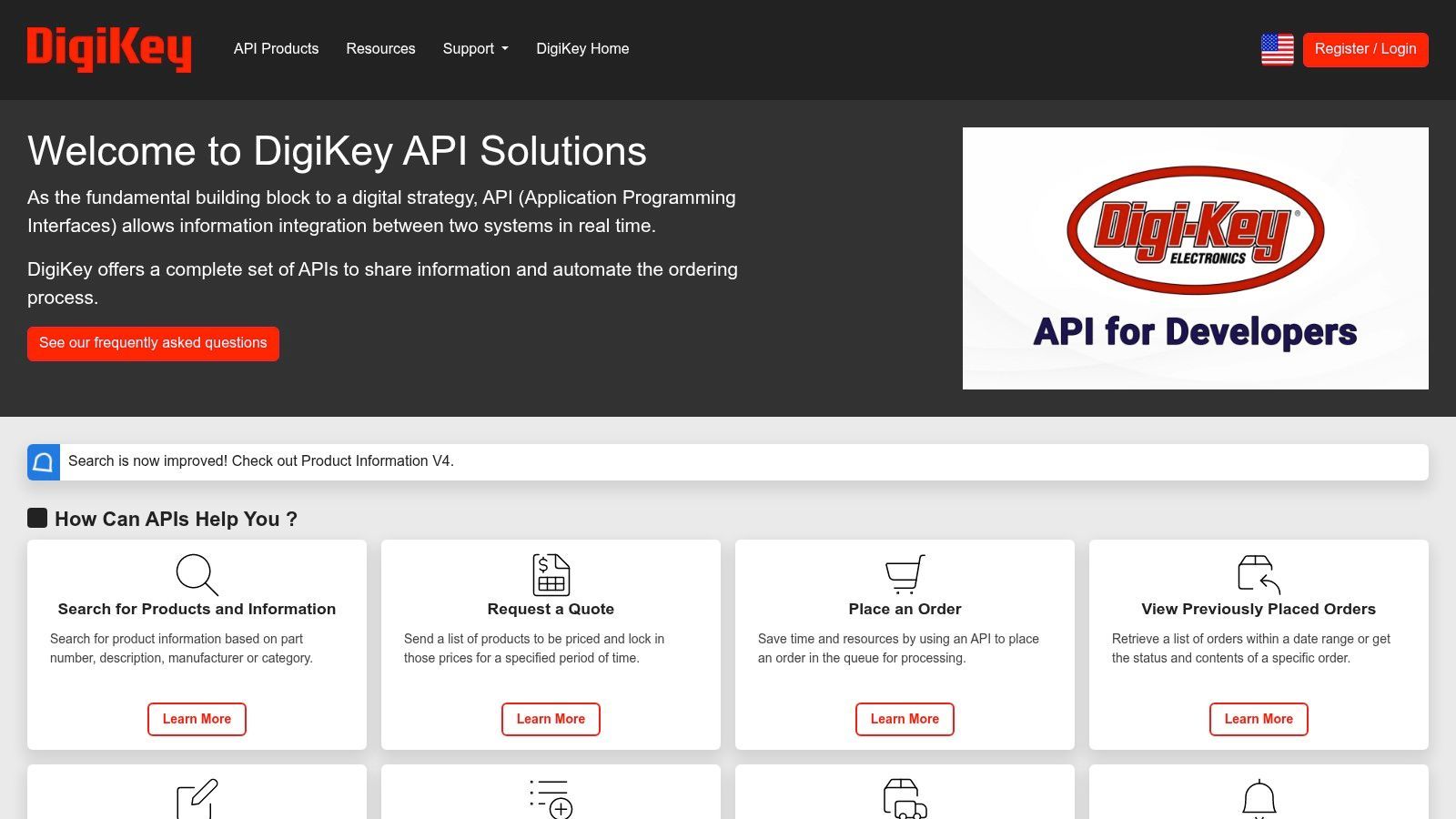
Digi-Key stands out because it treats APIs and procurement connectivity as commercial features, not just technical accessories. This perspective is impactful. In electronics sourcing, buyers often move between design, bill-of-materials validation, internal approvals, and automated ordering. Every manual step creates delay and introduces risk.
Its developer entry point is Digi-Key’s API and developer portal.
Why integration is the conversion strategy
A lot of teams still think CRO happens only on the page. Digi-Key shows why that’s too narrow. If your buyer needs current pricing, availability, order status, or procurement automation, then the primary conversion barrier might sit outside the visible storefront.
That’s why Digi-Key’s APIs, PunchOut support, account billing options, and machine-to-machine ordering matter so much. For repeat and enterprise customers, the best checkout is often the one they barely see because the order flows through their existing systems.
The teardown marketers should pay attention to
Digi-Key succeeds by compressing the distance between product discovery and purchase execution. In practice, that means product data quality, availability visibility, and order automation all work as one conversion system.
Marketers can apply that logic in several ways:
- Align paid search with inventory-sensitive demand: If availability shifts, ad strategy and landing pages need to reflect what buyers can source.
- Build product pages that support BOM validation: Electronics buyers need confidence in spec fit, not just a generic product overview.
- Treat developer resources as demand capture assets: API documentation and procurement enablement content often attract high-intent operational buyers.
The average electronics purchase path can involve engineers, sourcing teams, finance, and operations. The more your platform helps those groups move together, the stronger your conversion rate becomes.
Where CRO teams can go deeper
Many B2B sellers stop optimization at form fields and button color. That leaves money on the table. In categories like electronics, checkout friction often starts earlier with account structure, billing setup, shipping certainty, and reordering logic.
That’s why ecommerce checkout optimization work for B2B brands often has to include process design, not just front-end tweaks. Digi-Key is a strong reminder that conversion isn’t a page metric alone. It’s the total number of handoffs a buyer has to survive before the order gets placed.
The tradeoff is obvious. API and integration setup require technical resources. But for the right accounts, that complexity can become a moat. If your competitor has a nice storefront and you have a storefront plus procurement automation, you’ll be much harder to replace.
5. Fastenal
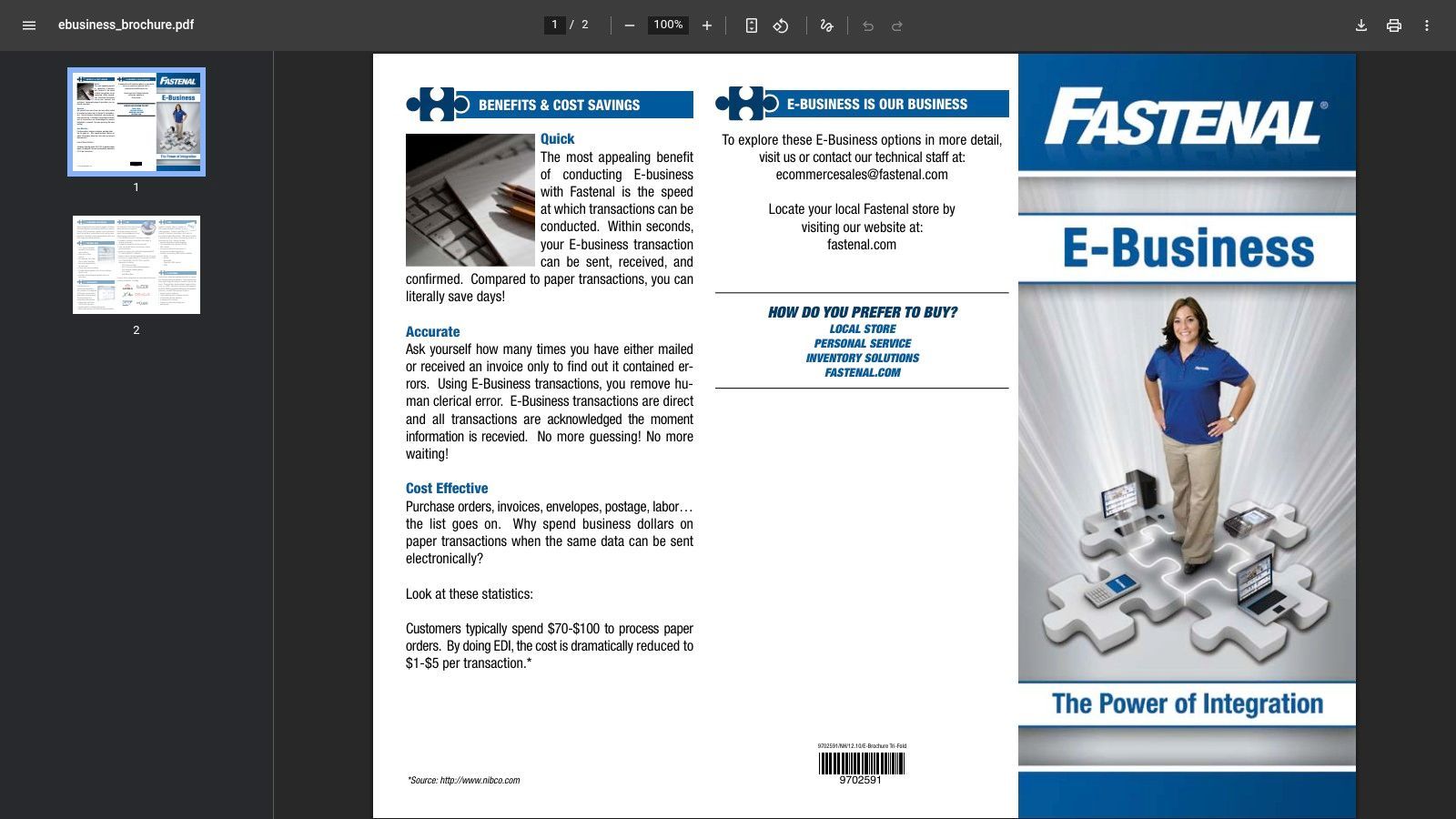
Fastenal is a strong example of hybrid B2B commerce. It doesn’t treat ecommerce as separate from field service, onsite programs, or inventory management. Instead, the digital layer supports a broader supply chain relationship. You can see that positioning in Fastenal’s eBusiness overview.
The model is bigger than the website
That matters because many industrial buyers aren’t looking for a transactional seller. They want fewer stockouts, simpler replenishment, and better control over local demand. Features like PunchOut, EDI/XML, availability filters, and managed inventory tie ordering behavior to physical operations.
In strategic terms, Fastenal uses ecommerce to deepen account stickiness. The site isn’t the whole product. It’s the interface to a service model that can include onsite support and usage-linked replenishment.
What this teaches about pricing and retention
Fastenal’s strongest lesson is that B2B retention often comes from workflow integration, not loyalty messaging. Once a customer’s replenishment process, internal purchasing rules, and location-level needs are wired into one supplier relationship, switching becomes harder.
That has two implications for marketers:
- SEO should target workflow problems, not just product names. Buyers search for vending, managed inventory, replenishment, and procurement solutions alongside product terms.
- Paid acquisition should qualify for operational fit. If your economics only work when a customer adopts the fuller service model, don’t optimize campaigns for shallow first-order volume.
If your most profitable accounts depend on operational integration, your website should sell the system, not just the SKU.
Where brands can misuse this lesson
The risk is overbuilding before demand exists. Fastenal’s model works best when customers have enough purchasing complexity or volume to justify deeper integration. Smaller accounts may not need the full architecture.
Still, the broader takeaway is powerful. If your category suffers from commoditization, don’t rely only on product pages to defend margin. Wrap ecommerce around inventory visibility, replenishment control, and procurement simplification. That turns a replaceable supplier into a harder-to-remove operating partner.
6. Uline
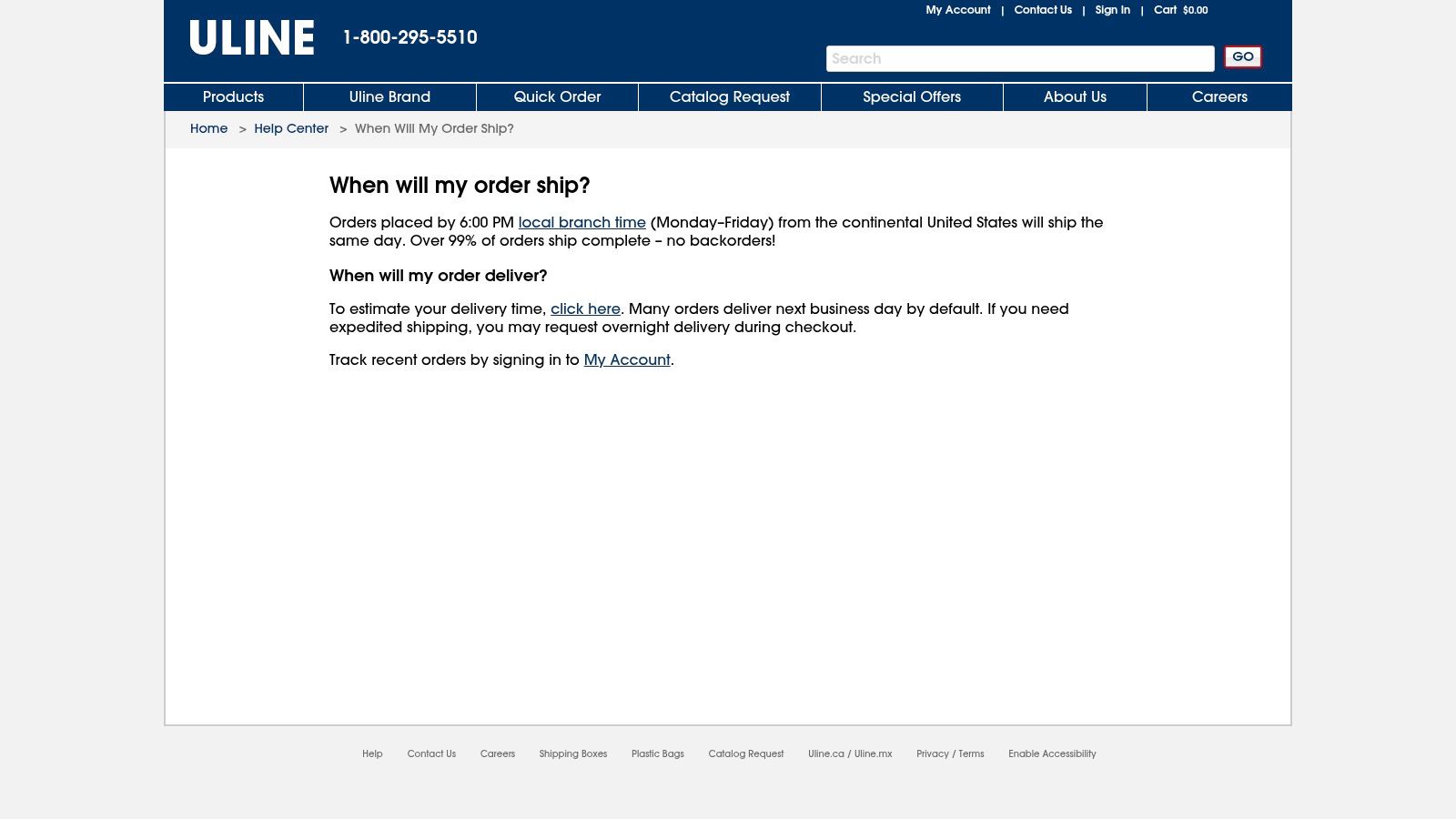
Uline wins on a simple promise executed with discipline: fast, predictable replenishment. For packaging, shipping, and warehouse supplies, that matters more than clever merchandising. Buyers often need confidence that they can place an order today and keep operations moving tomorrow.
Its service promise is documented on Uline’s shipping FAQ, which states same-day shipping for orders placed by 6:00 pm local branch time, with next-day options.
The strategy is reliability as conversion
Uline’s site doesn’t need to overexplain its value proposition because the operational message is the conversion device. Large in-stock assortment, warehouse coverage, straightforward ordering, and customer service all support the same commercial argument. You can depend on us when supplies run low.
That creates a very different optimization model from highly consultative B2B commerce. For Uline, the key questions are less about education and more about order speed, category clarity, and reorder convenience.
What marketers can learn from the simplicity
Uline’s strength is that it aligns traffic source, landing-page structure, and fulfillment promise. A buyer searching for cartons, labels, shelving, or janitorial supplies often has immediate demand. If the site confirms availability and shipping confidence fast, conversion becomes much easier.
A few replicable plays stand out:
- Lead with fulfillment confidence: If speed is your edge, put it near search results, category pages, and the cart.
- Support broad replenishment demand: Cross-sell around operational adjacencies, not just product similarity.
- Keep ordering simple: In replenishment categories, reducing clicks often matters more than adding rich persuasion.
This is also where pricing strategy gets nuanced. Uline may not always look cheapest without negotiated terms, but urgency changes price sensitivity. The more expensive the stockout, the more valuable dependable fulfillment becomes.
The tradeoff worth noticing
Uline appears less integration-forward than procurement-first sellers built around APIs and deep system connectivity. That can matter for buyers seeking advanced integration. But it also reflects a clear strategic choice. Uline optimizes for high-velocity ordering and service certainty, not maximum technical complexity.
For many distributors, that’s the right lesson. You don’t need every advanced feature. You need a sharp commercial promise and a site that makes that promise believable within seconds.
7. Ferguson
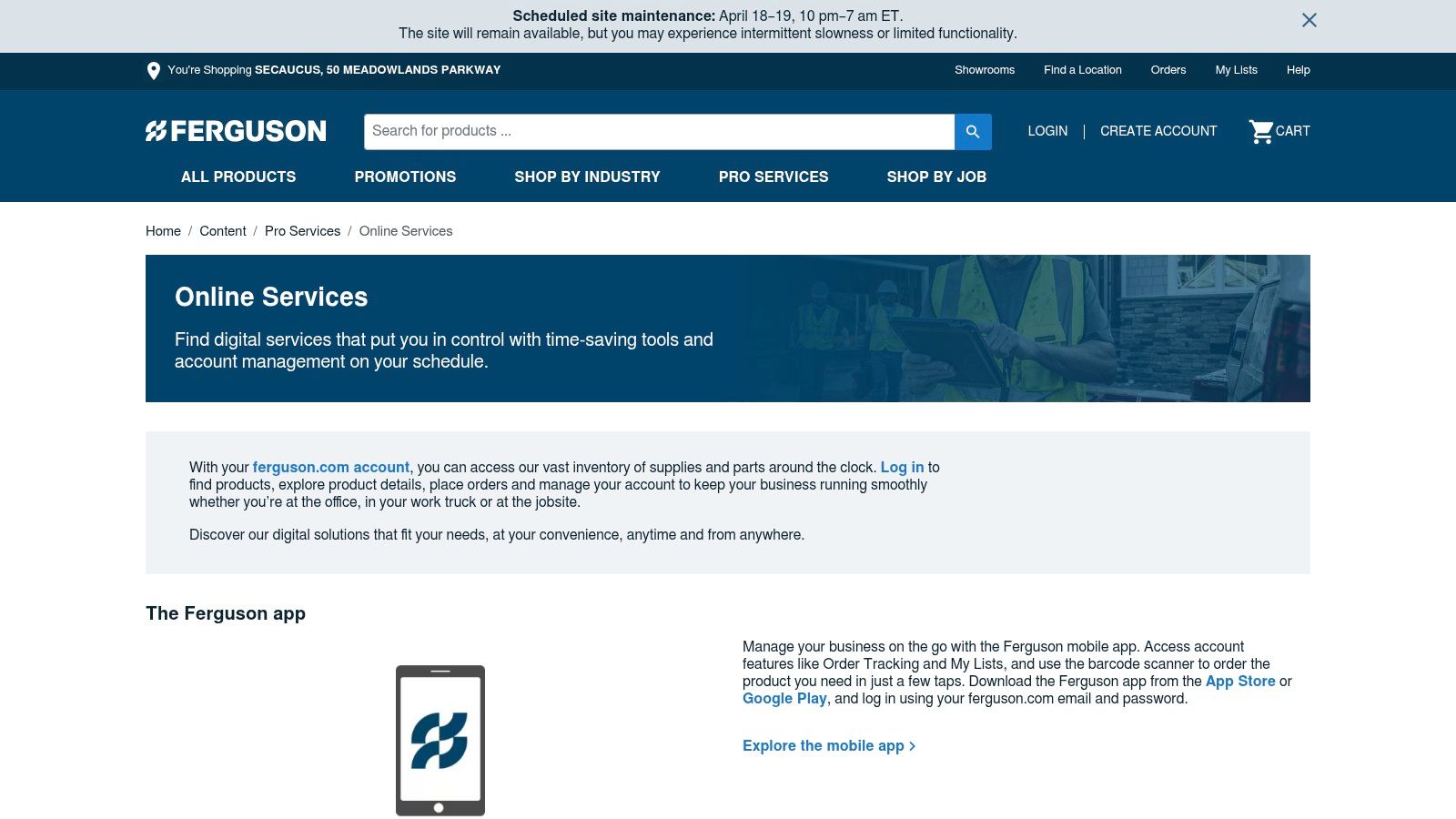
Ferguson is a strong b2b ecommerce example because it designs around trade workflows rather than generic ecommerce conventions. Contractors, HVAC teams, and field-based buyers don’t just need product access. They need job-linked lists, quote management, mobile usability, and procurement options that fit a business account.
Its digital capabilities are outlined on Ferguson’s online solutions page.
Niche workflow beats generic breadth
In this aspect, many broadline sellers lose ground. A generic distributor may carry similar inventory, but Ferguson adds trade-specific utility such as stored quotes, My Lists, mobile workflows, and tools like AHRI directory lookup for HVAC matching. Those aren’t cosmetic additions. They help buyers complete real work in the field.
That makes Ferguson a useful model for vertical B2B brands. Category expertise becomes much more credible when it’s embedded in the buying path itself.
The growth lesson for SEO and content
Ferguson’s approach points to a high-value strategy that many B2B marketers overlook. Build content and tools around the actual job step before purchase. Not just broad educational articles. Not just product pages. Tools, selectors, quote histories, compatibility references, and project lists.
That logic also applies to underserved customer segments. Bain’s analysis of small businesses argues that they remain a major untapped market in B2B ecommerce because many platforms are built for enterprise complexity instead of simplified interactions. The discussion appears in this Bain piece on selling to small businesses in B2B ecommerce. Ferguson’s model suggests a practical middle path: keep the platform capable enough for trade accounts, but orient the experience around common field tasks rather than internal seller complexity.
The more specialized your buyer’s job is, the less useful a generic storefront becomes.
Where the model fits best
Ferguson is strongest when the account is trade-focused and repeat purchasing is tied to active jobs. That makes it less ideal for casual or one-off buyers, but that’s fine. Focus improves conversion when the buyer segment is valuable enough.
For marketers, the implication is simple. Don’t try to serve every audience with the same interface. If contractors, technicians, engineers, or procurement managers buy differently, design and optimize for those motions separately. That’s how category authority turns into revenue.
Top 7 B2B eCommerce Companies Comparison
From Examples to Execution Your Next Steps
More B2B revenue is now flowing through digital channels than many leadership teams planned for five years ago. The companies that benefit are not the ones with the longest feature list. They are the ones that remove cost, delay, and uncertainty from buying.
That pattern shows up across all seven examples, but in different ways. Amazon Business reduces procurement friction inside complex organizations. Grainger turns availability and account context into trust. McMaster-Carr uses structured technical content to shorten product selection. Digi-Key extends that logic into APIs, BOM workflows, and machine-readable ordering. Fastenal connects e-commerce to inventory programs and branch execution. Uline wins with speed, catalog clarity, and delivery predictability. Ferguson builds around contractor workflows, where quotes, job lists, and branch support matter as much as the cart itself.
The strategic point is easy to miss. These are not isolated UX choices. They are growth systems that connect SEO, conversion, pricing, and retention.
As noted earlier, digital commerce now carries a large share of B2B transaction volume and revenue. That shifts the job of the website. It is no longer just a support channel for field sales. In many categories, it sets buyer expectations, captures demand earlier, and determines whether the account grows efficiently or becomes expensive to serve.
Execution is what separates digital revenue from digital noise. A buyer portal case study from Adobe showed that self-service can change both customer behavior and internal operations at the same time. In that example, 80% of orders were placed online, engaged customers moved 83% or more of their order volume to the portal, and the company automated about 15% of manual touches. The lesson is specific. Portal adoption matters when it shifts order mix, reduces manual work, and creates a lower-cost path to repeat revenue.
Start with a friction audit.
Do not limit that audit to page-level conversion rates. Map the points where buyers leave the digital path and return to email, phone, spreadsheets, or sales rep intervention. Look for repeated failures: missing account-specific pricing, weak product data, quote bottlenecks, poor search refinement, unclear delivery timing, and approval steps that break the session. Those moments usually hurt more than conversion. They distort SEO performance, lower paid traffic efficiency, increase cost-to-serve, and train customers to avoid self-service.
Then rank those problems by commercial impact, not by implementation convenience. If margin control is weak, pricing visibility and quote logic may matter more than a homepage redesign. If non-branded organic growth is flat, taxonomy, faceted navigation, and product content depth may be the primary constraint. If repeat purchasing is strong but average order handling is expensive, reorder tools, punchOut, approvals, and account dashboards may produce the better return.
That is the primary takeaway from each b2b ecommerce example in this article. The winning move is not copying Amazon Business or McMaster-Carr feature for feature. It is identifying the operational bottleneck behind their performance, then applying the same principle to your category, buyer, and sales motion.
At Ezca, that is how we approach B2B growth. We connect SEO, CRO, paid acquisition, and lifecycle work to the same revenue model, then use focused 90-day sprints to fix the points where demand capture and buying experience break down. When traffic quality, product discovery, pricing logic, and checkout workflow align, digital growth becomes easier to measure and easier to scale.
If you want help turning these lessons into a practical growth plan, Ezca Agency can help. We work with B2B, SaaS, and e-commerce brands in focused 90-day sprints to improve SEO, paid media, CRO, content, and lifecycle performance around the metrics that matter most.