
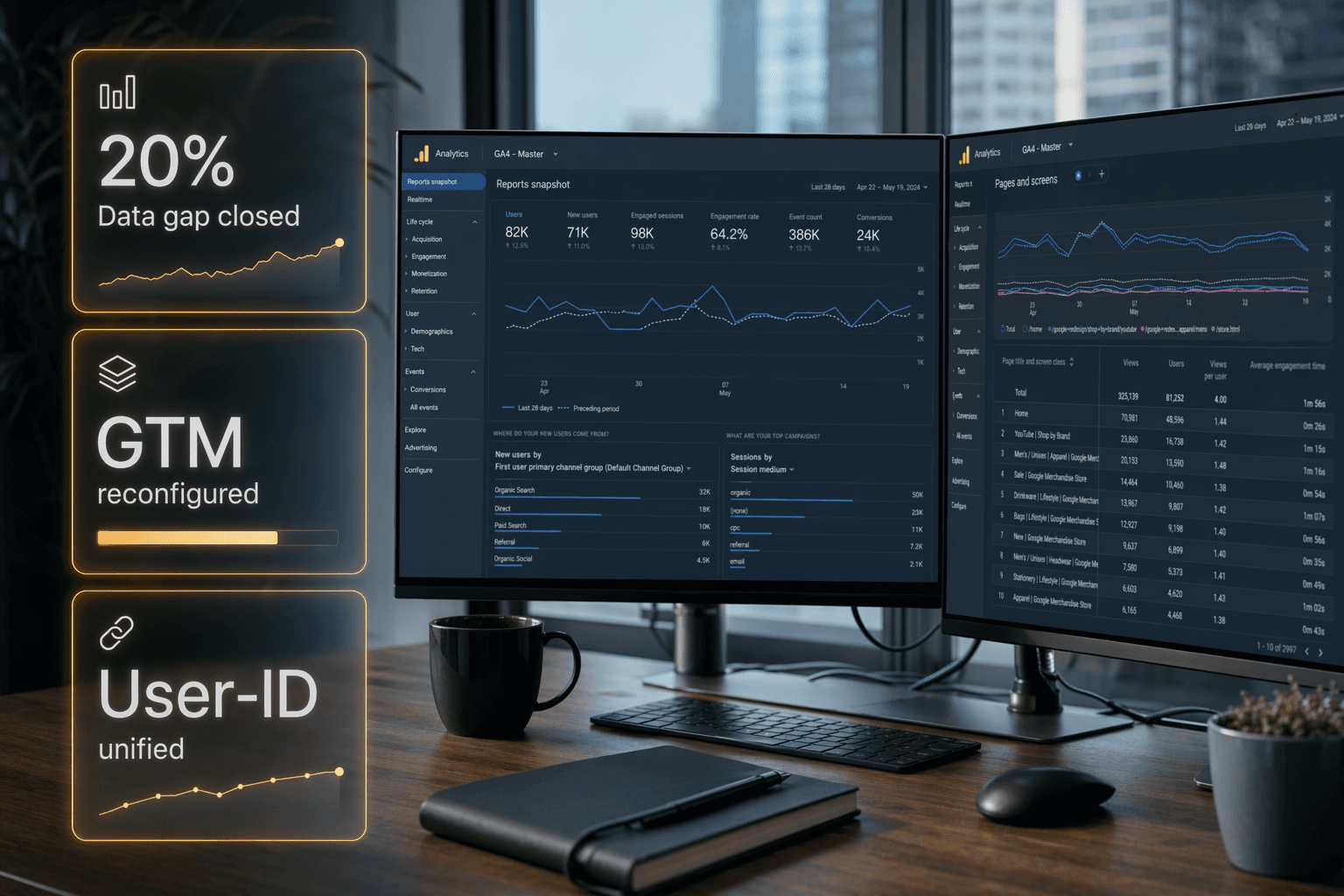
Qifa.ru had a 10–20% sales data discrepancy across analytics systems — EZCA rebuilt the entire tracking stack to give leadership a single reliable source of truth.
Qifa.ru is a B2B digital commerce platform connecting Russian buyers with Chinese and Russian manufacturers of footwear, bags, clothing, and children's goods. A persistent 10–20% discrepancy in sales data across analytics systems was undermining business decisions. EZCA performed a full-stack analytics rebuild: site code audit, GTM reconfiguration, User-ID unification, Google Analytics report overhaul, and CRM integration — delivering accurate, reconciled data across all systems.
Qifa.ru operates at B2B scale — bulk orders, complex buyer journeys, and multi-stage sales funnels across footwear, apparel, and accessories categories. At that scale, a 10–20% variance between analytics platforms isn't a reporting inconvenience — it corrupts every decision that follows: which channels to fund, which categories are growing, what conversion rates are real. The root causes were layered: duplicate event firing in GTM, incomplete pixel setup, no unified user identity across sessions, and CRM data sitting in a separate silo with no bridge to behavioral analytics. Without fixing the foundation, optimization efforts would keep optimizing toward false signals.
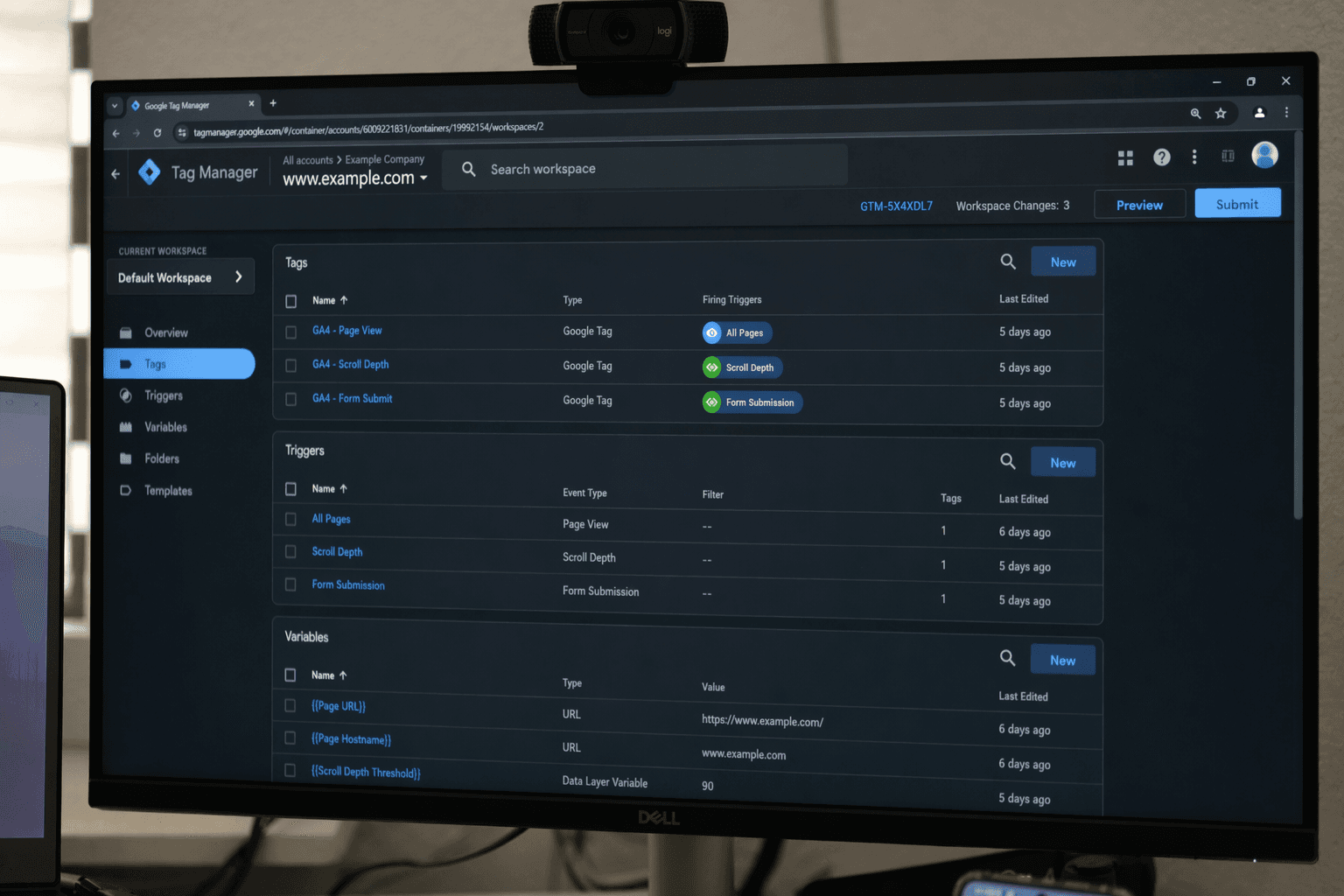
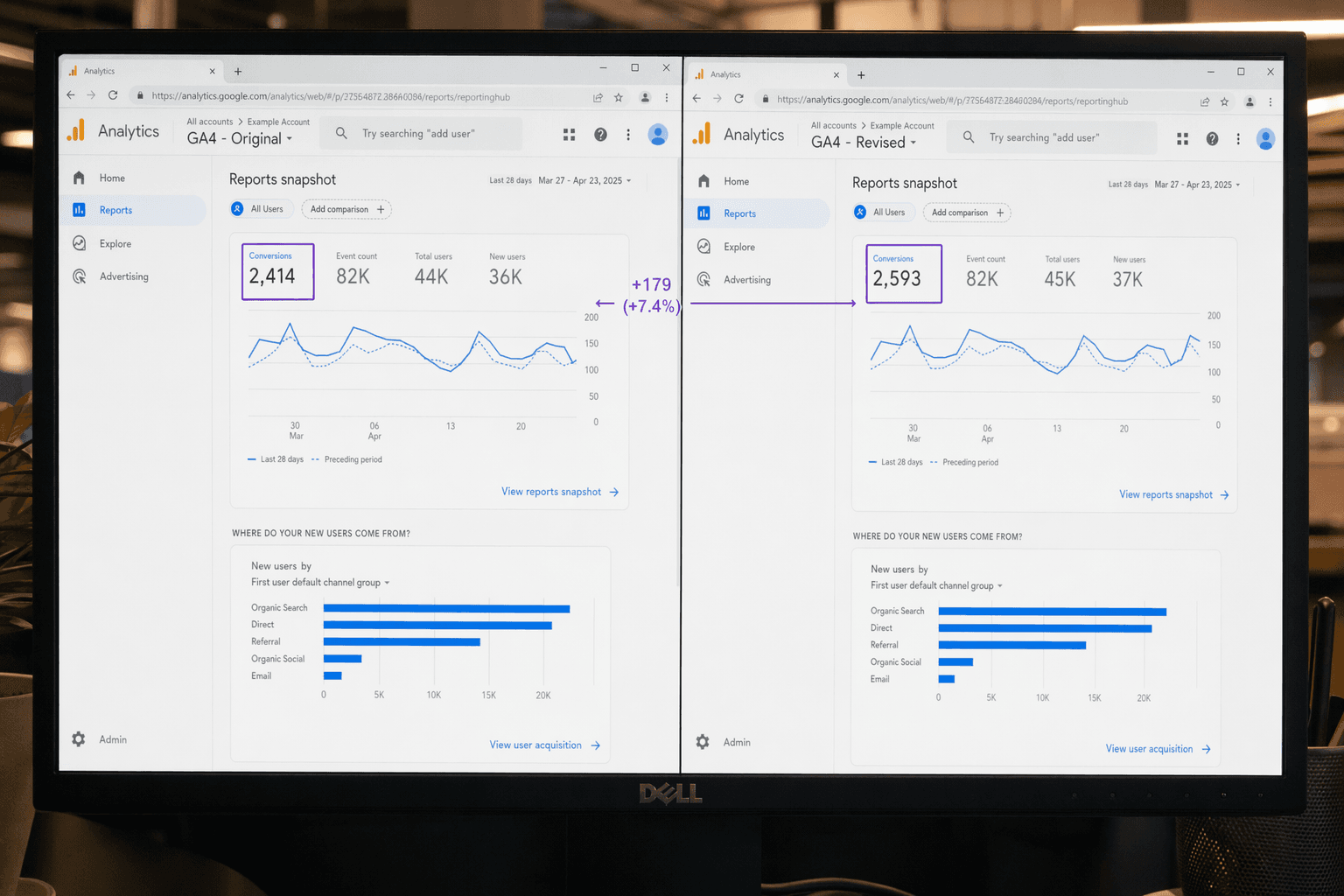
The engagement opened with a detailed code audit of the Qifa.ru site — identifying tracking errors, misconfigured pixels, and duplicate event triggers that were inflating or undercounting key actions. GTM was reconfigured from scratch: goal settings corrected against audit findings, data transfer optimized, and event deduplication implemented to stop double-counting. User-ID scripts were developed and deployed to unify cross-session and cross-device behavior under a single customer identifier, enabling accurate cohort and funnel analysis. Google Analytics reports were rebuilt for each key segment — sales, registrations, funnel stages — and validated by direct comparison against CRM records and server-side logs. The final step was a bi-directional CRM integration, linking Google Analytics records to CRM entries via uid and cid identifiers. Post-implementation, every component was audited for correctness before sign-off.
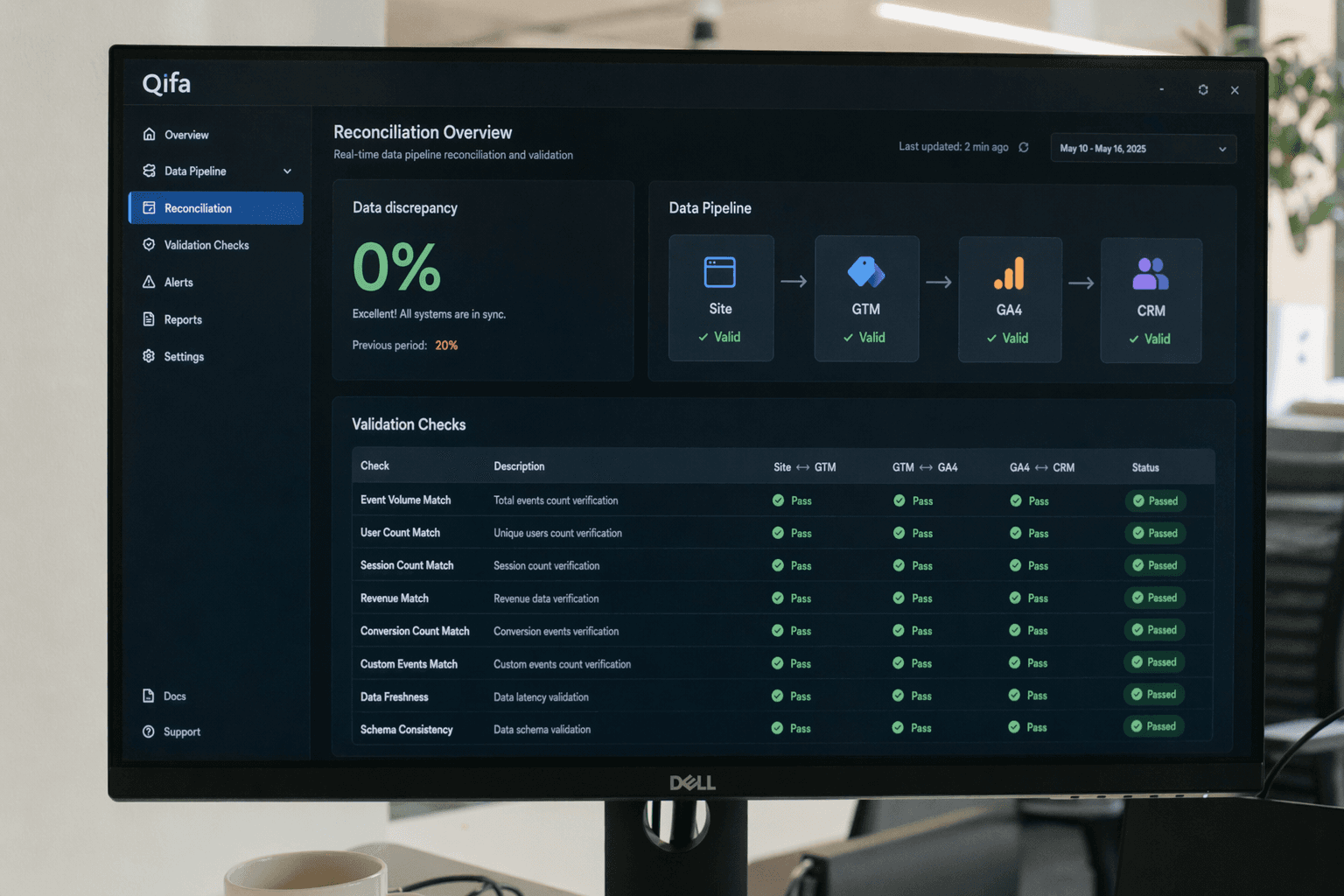
The 10–20% cross-system discrepancy was resolved, giving Qifa.ru's leadership a unified, trustworthy view of sales, registrations, and funnel performance. E-commerce category analytics became reliable enough to act on — enabling budget allocation decisions grounded in real data rather than best guesses. CRM integration unlocked a new layer of analysis: behavioral data from the site now matched against actual deal outcomes, making attribution modeling viable. The work eliminated the invisible tax that bad data was levying on every downstream marketing and product decision.
20-minute fit call — we scope a monthly Growth-Ops plan for your business.