
10 Social Media Marketing Responsibilities for 2026
Unlock growth by defining clear social media marketing responsibilities. Our guide covers roles, KPIs, and strategies for marketing leaders and business owners.

Social media is no longer a support channel. For many brands, it influences demand creation, deal velocity, retention, and reputation at the same time. Treating it as a junior publishing function is an expensive operating mistake.
A key management question is not how often to post. It is who owns each outcome, how decisions get made, and which metrics determine whether social is creating revenue or consuming budget.
High-performing teams separate responsibilities by business impact. One owner sets priorities and approves the content direction. Another manages community response time and escalation paths. Another runs paid efficiency, retargeting logic, and handoff to conversion assets. Leadership ties those pieces together with pipeline contribution, customer acquisition cost, and brand risk oversight.
This shift is critical. Social is already central to the channel mix, and fragmented ownership usually produces the same predictable problems: inconsistent messaging, slow approvals, duplicated work, weak reporting, and no clear line between activity and revenue.
A better model starts with role design. Define what social must produce first, then assign workflows, KPIs, and decision rights around that target. In practice, that may mean a coordinator handling publishing operations, a manager owning campaign execution and community performance, and a director connecting social to pipeline, revenue, and customer value. If outside support is part of the model, structure it around clear deliverables and fixed decision cycles. Ezca’s 90-day sprint approach is useful because it forces weekly prioritization against return, not output volume, and it works best when paired with a documented content marketing system and a simple RACI.
The following 10 responsibilities are designed to move social from a cost center to a growth engine.
1. Content Strategy & Planning
Most social programs fail before the first post goes live. The issue is not design quality. It is planning quality.
A content calendar should map to business priorities first, then platform behavior. If the company needs demos, qualified leads, repeat purchases, or category authority, the calendar should make that visible. Posting “consistently” without that alignment just creates noise.
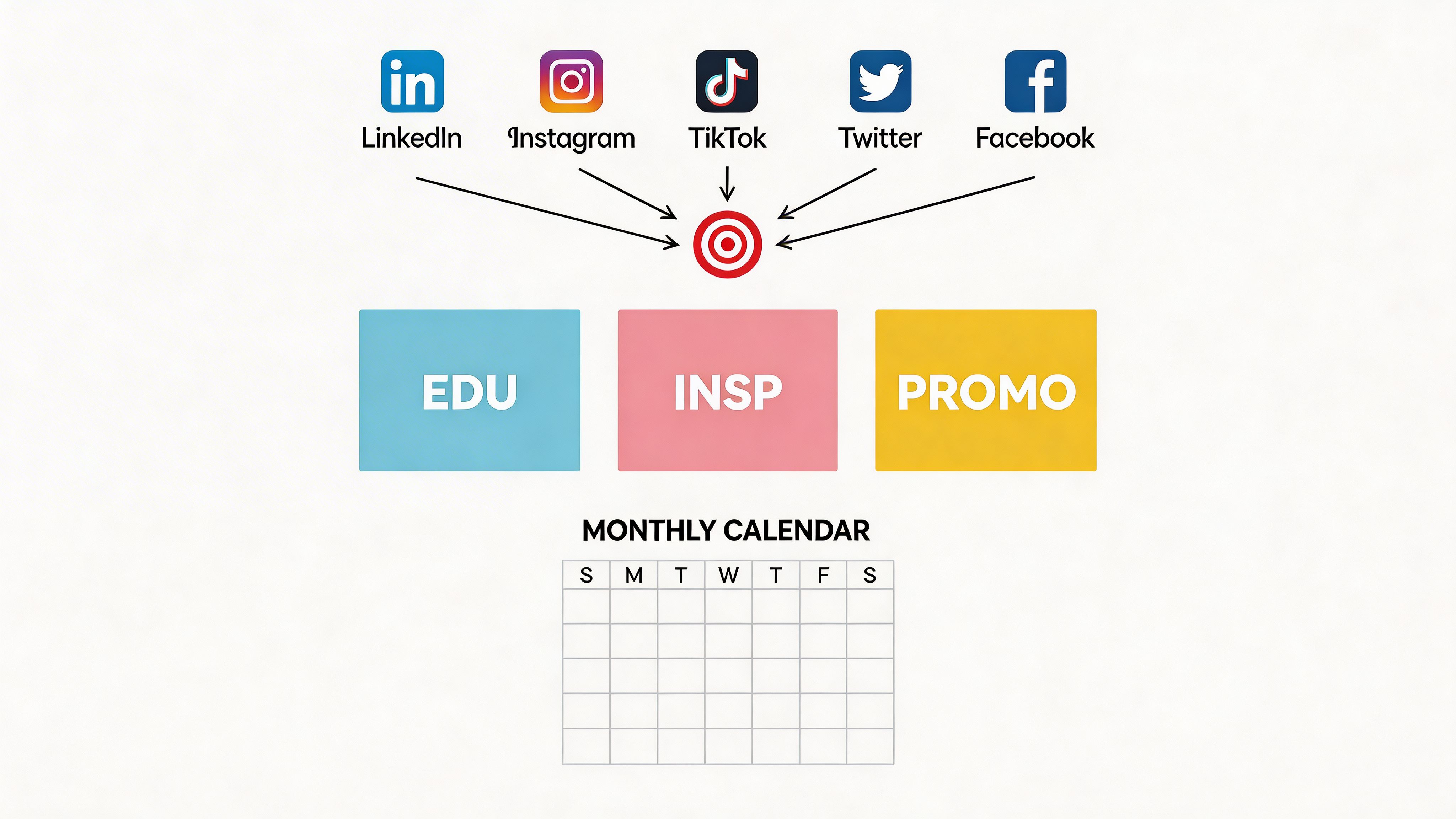
HubSpot is a useful model here because its social output consistently reinforces education and thought leadership. Stripe takes a different route, leaning into developer credibility, product use cases, and community stories. Both approaches work because the planning reflects the buyer.
Build pillars before you build posts
Strong teams usually organize content into a few repeatable pillars:
- Problem education: Explain the buyer’s pain in plain language.
- Product relevance: Show how the offer solves a real use case.
- Proof: Share testimonials, wins, product moments, and customer outcomes.
- Authority: Publish insights that make the brand worth following.
For SaaS, pillar-cluster planning works well. One cluster may cover a use case, another a customer segment, another a technical workflow. That makes it easier to repurpose one idea across LinkedIn, Instagram, YouTube Shorts, and X without producing random one-off assets.
A practical planning cadence is four to six weeks ahead, with room for timely inserts. Social teams that over-plan usually miss the moment. Teams that under-plan usually miss consistency.
What good ownership looks like
The responsibility is not “make a calendar.” It is “own message-market fit across platforms.”
That means the person accountable for strategy should also sync social with email, paid campaigns, launches, webinars, and sales priorities. If your social calendar ignores the rest of the funnel, it becomes decorative.
Keep one planning document that includes post theme, format, offer, target segment, CTA, and success metric. If the post has no business purpose, cut it.
If you need outside support, integrated content marketing services can help. The value is not more content. The value is a tighter connection between content themes, buyer intent, and downstream conversion.
2. Community Management & Engagement
Community management is a revenue function. Treat it like a junior support queue and the brand pays for it in slower deal cycles, higher churn risk, and missed demand from people who were ready to buy but never got a useful reply.
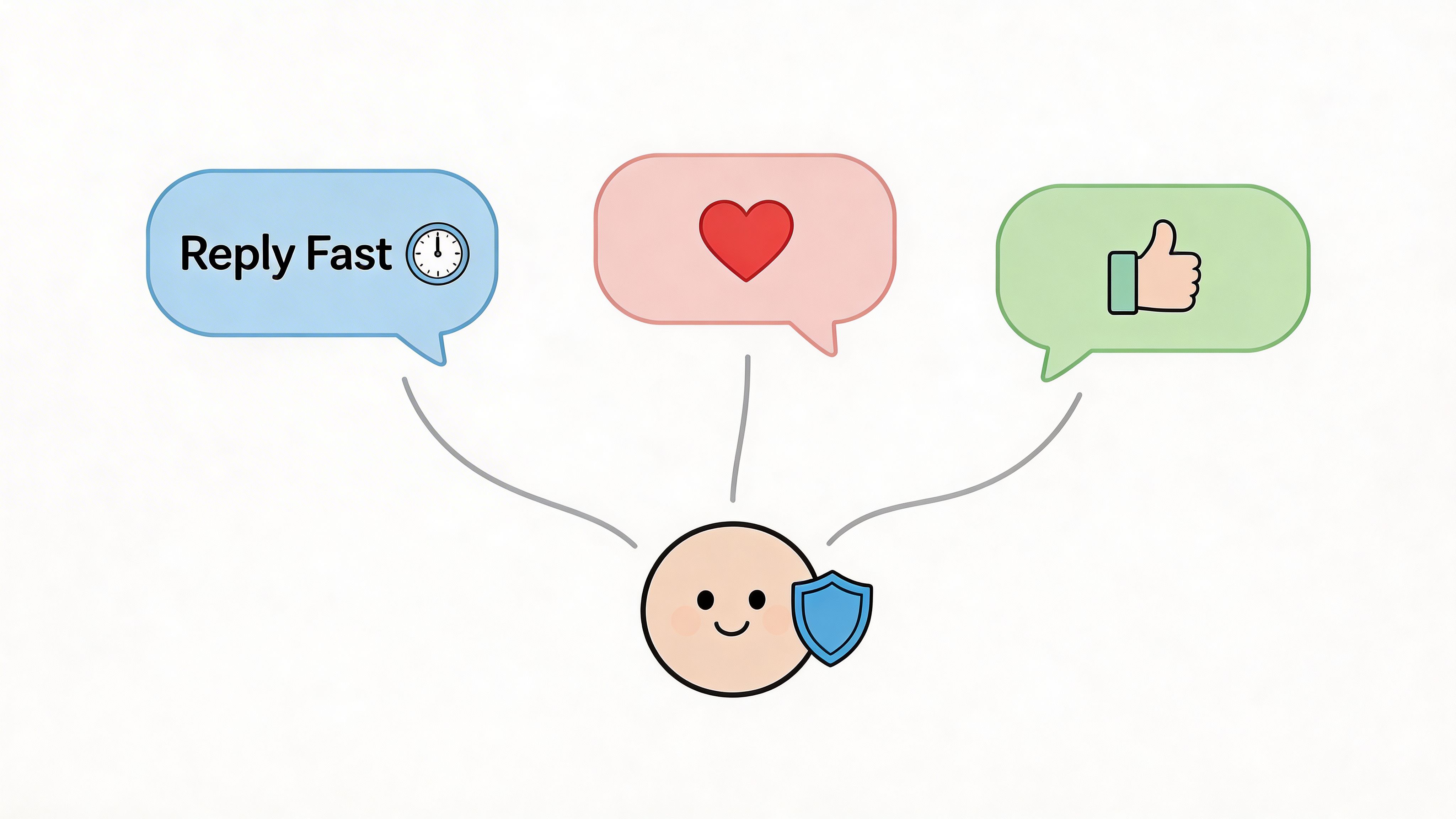
The scope is wider than replying to comments. It includes DMs, mentions, tagged posts, customer complaints, creator outreach, UGC permissions, review signals, and handoffs to support, sales, PR, or legal. On many teams, social is the first place a prospect asks a product question and the first place a frustrated customer voices a problem. If nobody owns that workflow, response quality becomes inconsistent and the business loses visibility into what the market is saying.
The operational mistake I see often is assigning community work to the most junior person without authority, context, or escalation paths. Speed matters, but accuracy matters more. A fast reply that sends people to the wrong help article or ignores purchase intent creates more work for support and burns trust with the buyer.
Strong teams structure community management by role, not by inbox volume alone:
- Coordinator or specialist: Handles daily replies, tags priority conversations, logs recurring questions, and routes issues by SLA.
- Manager: Owns response standards, escalation logic, creator and advocate identification, and weekly insight summaries for marketing, support, and product.
- Director or head of social: Sets service model, staffing levels, risk thresholds, and the KPIs tied to retention, lead quality, and brand health.
That role clarity is what turns engagement into an operating system instead of a reactive task pile.
A practical model is a 90-day sprint. In the first month, define response categories and approval rules. In the second, build templates for recurring situations and train the team on edge cases. In the third, measure where community interactions influence pipeline, retention, and support deflection. Agencies can support the setup, but ownership should stay in-house because product nuance and escalation judgment are hard to outsource well.
Use a simple RACI for the work. Community managers are responsible for first response and triage. Support is accountable for resolution on service issues. Marketing owns brand voice. Legal and PR are consulted only on defined risk scenarios. Sales gets looped in when comments or DMs show buying intent. That structure cuts delays without creating approval bottlenecks.
What good engagement produces
The output is not “high engagement.” The output is usable business intelligence and faster action.
Well-run community teams surface objections before they show up in churn surveys. They capture exact customer language that improves ad copy and landing pages. They identify advocates worth nurturing into case studies, referral partners, or creators. If your team needs a clearer financial model for creator programs, this guide can help you calculate the ROI of your influencer marketing efforts.
Track a short list of metrics tied to outcomes:
- Response time by channel and issue type
- Resolution rate for social-originated service questions
- Sales conversations created from comments and DMs
- UGC or advocacy opportunities identified
- Recurring objections, feature requests, and sentiment shifts
The trade-off is straightforward. Tight controls reduce risk but slow response time and make replies sound scripted. More autonomy improves speed and authenticity but requires training, documentation, and clear escalation rules. The right balance depends on brand risk, average deal size, and how often social conversations turn into support or sales interactions.
Community management earns its seat at the leadership table when it feeds retention, pipeline, and product insight, not just sentiment reports.
3. Performance Analytics & Reporting
Reporting decides whether social is treated as a growth channel or a cost center.
Teams that review performance once a month react too late. By then, the losing creative has already burned budget, the wrong audience has soaked up impressions, and the strongest conversion path is still underfunded. Weekly analytics reviews keep social tied to operational decisions, not retrospective summaries.
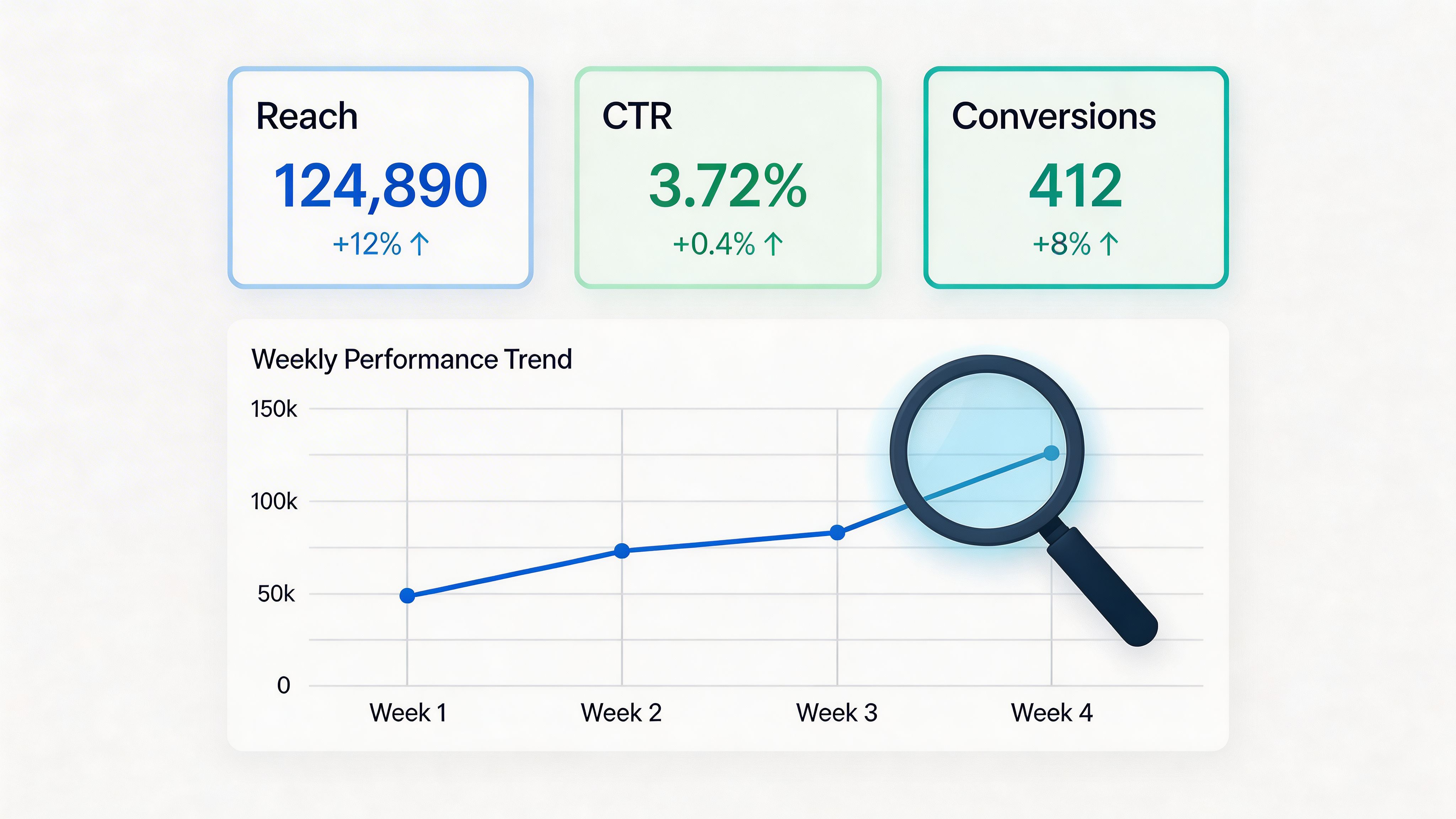
The right reporting model changes by business type, but the principle stays the same. Measure the signals that map to revenue.
For e-commerce, that usually means social-attributed revenue, assisted conversions, return by creative, and cost by audience segment. For B2B, the scoreboard is qualified leads, demo requests, opportunity creation, and influenced pipeline. For SaaS, I would look at trial starts, activation milestones, and downstream customer quality, because cheap signups that never activate create false confidence.
Report on what changes behavior
A useful dashboard helps the team make five decisions fast:
- Which posts or ads drove business outcomes
- Which audience segments should be cut, refined, or expanded
- Which platform earns the next dollar of budget
- Which creative pattern is worth repeating
- Which landing pages are reducing conversion rate
That sounds simple, but role clarity is what makes it work. Coordinators gather platform data and maintain naming hygiene. Managers interpret patterns, flag performance risks, and recommend budget shifts. Directors connect channel performance to pipeline, revenue, and forecast confidence. If everyone owns “reporting,” no one owns the decision.
Engagement still has a place. It helps identify resonance, content fatigue, and message fit. It should not be the final scorecard unless the business goal is awareness and the executive team agrees to judge it that way. In practice, high engagement from low-intent audiences often inflates reporting while sales teams see no lift.
Build a reporting system executives will trust
Executive confidence comes from three things. Clean tracking, channel separation, and financial relevance.
Use UTMs on every outbound link. Split organic, paid, influencer, and retargeting results into separate views. Reconcile platform numbers with CRM, ecommerce, or attribution reporting so social performance can be discussed in the same language as the rest of the business. Role design also proves important here. A strong team does not wait for quarter-end to discover attribution gaps. The analyst or channel lead should own weekly QA on tracking, while the department lead owns the narrative: what changed, why it changed, and what action follows. If your team also manages media budgets, your reporting cadence should connect directly to paid social campaign management and optimization services rather than sit in a separate reporting silo.
Influencer attribution usually breaks first because the tracking chain is messier. A cleaner process is to calculate the ROI of your influencer marketing efforts with trackable links, offer codes, assisted conversion rules, and a documented view of contribution that finance can audit.
The trade-off is straightforward. More metrics create the appearance of rigor, but slower decisions. Fewer metrics improve speed, but only if the selected KPIs reflect actual commercial impact.
Good reporting makes budget shifts, creative changes, and channel priorities obvious. If the weekly review ends without a clear action list, the reporting system is tracking activity instead of performance.
4. Paid Social Advertising Management
Paid social is where weak social operations get exposed fast. Money amplifies every flaw in targeting, tracking, creative, and conversion flow.
The responsibility is not “run ads.” It is to turn budget into measurable pipeline or revenue with as little waste as possible. That requires clear ownership across roles. A coordinator can manage trafficking and QA. A channel manager should own testing cadence, budget pacing, and audience structure. A director should set spend thresholds, approve scaling decisions, and decide when paid social deserves more capital than search, affiliate, or creator programs.
Strong teams build paid social around operating rules, not platform habits.
A working structure usually includes:
- Audience segmentation: Separate prospecting, engaged users, existing customers, and retargeting pools so spend matches funnel stage.
- Creative testing: Test one major variable at a time, such as hook, offer framing, format, or CTA, so results are interpretable.
- Offer mapping: Match low-friction asks to colder traffic and reserve stronger conversion pushes for higher-intent audiences.
- Budget governance: Reallocate spend based on marginal return, not channel politics or attachment to a platform.
Platform choice should follow buyer behavior and economics. Facebook and Instagram still carry large reach and broad ecommerce utility. LinkedIn can justify a higher CPM if lead quality closes better. TikTok can outperform on attention and creative velocity, but many teams struggle to convert that attention without a stronger offer and landing page experience.
The failures are predictable. Teams scale before event tracking is stable. They keep adding creatives without a testing hypothesis. They mix prospecting and retargeting inside the same campaign, then wonder why reporting is impossible to trust. They judge performance inside the ad platform without reconciling results against CRM or sales data.
I treat paid social like a 90-day sprint with explicit stage gates. Days 1 to 30 validate tracking, baseline CAC, and initial message-market fit. Days 31 to 60 focus on creative iteration and audience refinement. Days 61 to 90 earn the right to scale, or trigger a budget cut if contribution still depends on weak attribution or branded demand.
A simple RACI model keeps this from drifting. The paid social manager is responsible for launch and optimization. Creative owns asset production against a testing brief. Analytics validates attribution and reporting logic. The marketing lead is accountable for budget allocation and the final decision to scale, pause, or rebuild.
Brands that also use creators should coordinate paid and partnership planning instead of running them as separate programs. The handoff matters. Creator content often becomes paid social creative. Paid social performance can also identify angles worth expanding through influencer marketing programs. That connection improves asset yield and lowers creative production waste.
For brands that need hands-on channel execution, social ads services are useful when the partner ties campaign management to business KPIs instead of platform reporting alone.
5. Influencer & Partnership Management
Influencer programs produce ROI when they are run like a distribution channel, not a PR side project.
The mistake I see most often is role confusion. A brand hires creators for awareness, expects direct response performance, skips basic tracking, and then argues about results after the campaign ends. Strong partnership management fixes that upfront by assigning ownership for sourcing, vetting, briefing, legal review, content approval, usage rights, paid amplification, and revenue reporting.
Creator selection starts with commercial fit. Follower count is a weak filter on its own. The better screen is whether the creator consistently reaches the buyer, earns comments that show intent, and publishes in a format that can move from organic partnership to paid media without expensive rework.
That standard changes by company type. A SaaS brand may get more pipeline from a trusted YouTube reviewer or operator on LinkedIn than from a broad lifestyle account. An ecommerce brand usually wins with creators who already know how to film product-first content that feels native in-feed. In B2B, newsletter operators with social distribution can outperform larger personalities because the audience expects recommendations tied to real workflows.
Vet creators like channel partners
The operational model matters as much as the creative.
I use four filters before approving any partner:
- Audience fit: The creator’s audience should match the buyer by category, intent, and buying power.
- Engagement quality: Comments, saves, replies, and conversation depth matter more than passive reactions.
- Brand risk: Past posts, sponsor history, disclosure habits, and audience sentiment need review before money goes out.
- Asset utility: The content should work both on the creator’s channel and as whitelisted or licensed creative for paid use.
Teams often waste budget when this is not considered. They approve a creator based on reach, then discover the audience is wrong, the content cannot be reused in ads, or the contract never secured usage rights beyond one post.
Build a repeatable operating system
One-off deals can create a short lift in attention. Ongoing partnerships usually produce better economics because the creator learns the offer, the audience sees repeated proof, and the brand gets more usable content per relationship.
That requires structure. Someone owns outreach and negotiation. Someone approves briefs and claims. Someone validates links, promo codes, landing page alignment, and post-campaign reporting. If those responsibilities sit across brand, legal, paid social, and analytics without a clear RACI, creator programs turn into a messy handoff chain.
A good brief stays tight. Define the buyer, the promise, required talking points, compliance boundaries, CTA, and success metric. Leave room for the creator’s delivery style. Over-scripted creator content usually performs like an ad, and audiences treat it that way.
Teams building a formal creator program often use outside support for sourcing and execution. influencer marketing services for vetting, campaign management, and attribution discipline can help when the partner is accountable for business outcomes, not just booked posts.
Partnerships also affect conversion quality. Creator traffic often behaves differently from paid social traffic because trust enters earlier in the journey, but that advantage disappears if the landing experience breaks message match or adds friction. The principles in Mastering Conversion Rate Optimization are useful here, especially when partnership traffic is being evaluated against revenue instead of clicks alone.
The best creator programs do not scale by adding more names. They scale by improving partner fit, tightening operating process, and turning high-performing relationships into repeatable revenue.
6. Conversion Rate Optimization for Social Channels
Social teams often celebrate the click and ignore what happens after it. That is expensive.
A large share of social underperformance has nothing to do with the ad or post. The problem sits on the landing page, in the form flow, in the offer sequence, or in the mismatch between what the social creative promised and what the page delivered.
Social traffic needs a different landing experience
Traffic from social is usually colder, faster-moving, and more context-light than branded search traffic. That means the post-click experience must remove friction quickly.
Good social CRO usually includes:
- Message match: The page should repeat the promise, angle, and visual logic from the ad.
- Focused CTAs: Give one primary next step, not five equal options.
- Shorter forms: Ask only for what the next stage needs.
- Mobile-first layout: Social traffic arrives heavily on mobile, so load speed and layout matter.
This is why many high-performing teams build segment-specific landing pages for different audiences or creative angles instead of sending every click to the same generic page. A B2B buyer from a LinkedIn thought-leadership ad should not land on the same page as a warm retargeting visitor from Instagram.
Optimize the whole chain
Conversion rate optimization is one of the most overlooked social media marketing responsibilities because it sits between teams. Paid owns the click. Web owns the page. Sales owns the follow-up. Nobody owns the full path.
That has to change. One person or squad should be accountable for social-to-conversion performance end to end.
Useful methods include heatmaps, session recordings, form analysis, copy tests, CTA tests, and variant testing by audience segment. The key is operational patience. Change one variable at a time, learn from it, and roll those lessons back into creative production.
A strong practical resource on this discipline is Mastering Conversion Rate Optimization, especially if your current reporting shows healthy reach and weak commercial return.
7. Brand Monitoring, Social Listening & Crisis Management
Brand monitoring protects revenue. Teams that treat it as a side task usually find problems after they have already hit conversion rate, retention, or sales velocity.
Used well, social listening does three jobs at once. It catches reputation risk early, surfaces product and service issues in plain customer language, and shows where demand is shifting before that change appears in a monthly dashboard. That is why I assign it as an operating responsibility, not just a reporting function.
Listening should trigger action across teams
A serious monitoring setup tracks more than @mentions. It covers product names, executive names, campaign hashtags, competitor comparisons, recurring complaints, category keywords, and the phrases buyers use when they explain why they chose you or rejected you.
That input should move fast.
- Product needs repeated friction points, bug patterns, and feature requests.
- Sales needs objection language, competitor mentions, and proof points buyers trust.
- Content needs recurring questions, misconceptions, and terminology customers use.
- PR and leadership need early signals when sentiment starts to shift or a sensitive issue gains traction.
The trade-off is volume versus signal. A coordinator can collect mentions. A manager should classify patterns and escalate issues. A director decides which themes justify a response, a content change, a product fix, or executive involvement. If nobody owns that decision path, listening turns into a pile of screenshots with no commercial value.
A simple rule helps. If the same issue appears repeatedly across posts, comments, DMs, reviews, and customer support logs, it is no longer a social media issue. It is a business issue.
Crisis readiness depends on role clarity
Crisis management fails when approval paths are vague. By the time a complaint thread turns into a PR problem, the team should already know who monitors, who responds first, who approves public statements, and what gets escalated immediately. Role design matters more than tools in such situations. A practical RACI model usually looks like this:
- Coordinator or community manager: monitor channels, flag anomalies, log high-risk posts
- Social manager: assess severity, draft response, coordinate with support or PR
- Legal, PR, or executive lead: approve statements for regulatory, safety, or reputational issues
- Marketing director: own final escalation path and post-incident review
That structure works well in 90-day operating sprints. In the first sprint, set alert terms, escalation thresholds, and response templates. In the second, test the workflow with simulations. In the third, tighten handoff speed and reporting so leadership sees risk trends, not isolated incidents.
The first response shapes the outcome
Early responses need three elements. Acknowledge the issue. State the next step. Move the conversation to the right channel only when that helps the customer, not when the brand is trying to hide the problem.
Corporate phrasing usually makes situations worse. So does silence.
A SaaS team might catch onboarding frustration before churn rises. An e-commerce brand might spot a shipping delay pattern before review scores drop. A B2B company might see a competitor narrative spreading and counter it through sales enablement and executive content before pipeline quality slips.
Daily monitoring can sit with managers or coordinators. Accountability should sit higher. Reputation issues move fast, and the cost is rarely limited to comments. They show up later in branded search, win rates, retention, and paid efficiency.
8. Video Content Creation & Distribution
Video now carries a larger share of social reach, consideration, and assisted conversions than many teams admit in budget meetings. Treating it like a side task creates a predictable result. Inconsistent output, slow approvals, weak hooks, and a library full of assets nobody can repurpose.
The operational question is not whether to make video. It is who owns each part of the system, how fast the team can ship, and which formats are tied to pipeline, revenue, or retention goals.
High-performing teams build a video operating model, not a content backlog
Polished production has a place, especially for launches, customer proof, and paid campaigns. Day-to-day social video usually wins on clarity and speed. If the first second does not earn attention, the lighting setup does not matter much.
I usually split video responsibilities by role so output stays high without creating approval bottlenecks:
- Coordinator: manage shoot calendar, creator logistics, asset naming, captions, and platform uploads
- Social manager: write hooks, shape platform-specific briefs, publish, moderate comments, and identify winning cuts
- Designer or editor: turn raw footage into channel-native versions for Reels, TikTok, Shorts, and Stories
- Content lead or strategist: align videos to content pillars, campaign themes, offers, and audience stage
- Marketing director: approve investment level, decide what gets amplified with paid support, and hold the team to business outcomes
That structure also fits a 90-day sprint model. Sprint one builds the production system and content pillars. Sprint two increases output and tests recurring formats. Sprint three scales the winners and cuts formats that generate views but no downstream value.
Creative quality starts with the brief
Teams lose time in editing because the brief was weak at the start. A usable brief answers five questions: who the video is for, what pain point or desire it addresses, what hook opens it, what proof supports the point, and what action the viewer should take next.
Strong social video usually includes a few recurring ingredients. A clear hook in the opening beat. One idea per clip. Human presence when trust matters. Captions that carry the point without sound. An ending that matches the goal, whether that is a click, save, comment, or product view.
Educational clips can build qualified demand. Demo clips can reduce friction. Testimonial and behind-the-scenes footage can increase trust faster than polished brand messaging because buyers see the product in real use.
A practical production workflow often looks like this:
- Capture in batches: record multiple intros, demos, customer answers, and reactions in one session
- Edit for native placement: adjust pacing, framing, text treatment, and length by platform
- Build modular assets: save clean hooks, proof segments, and product shots so future edits move faster
- Tag by business purpose: organize assets by education, objection handling, proof, product feature, and conversion intent
- Track usage rights: document creator permissions, music limits, and paid usage terms before distribution
One useful primer on making social video more effective is below.
Distribution decides whether production effort pays back
A strong edit can still underperform if the packaging is wrong. The first frame, on-screen text, caption, cover image, posting window, and early comment activity all affect whether the asset earns reach and action.
Distribution needs ownership. One person should be responsible for versioning, publishing, and reporting by channel. Another should decide whether a post stays organic, gets creator whitelisting support, or moves into paid amplification. Without that handoff, teams end up measuring effort instead of return.
Native posting usually outperforms sending users off-platform too early. Repurposing also needs discipline. One webinar, customer interview, or product walkthrough should produce a week or two of usable short-form clips if the asset library is organized correctly. That is where margin improves. The team creates once, distributes many times, and learns which message earns both attention and conversion.
9. Customer Journey Mapping & Retargeting Strategy
Retargeting controls whether social traffic becomes revenue or disappears into untracked consideration.
The job is bigger than ad setup. It requires a clear map of how a prospect moves from first impression to evaluation, conversion, and post-purchase expansion. Social, paid media, CRM, and lifecycle marketing all touch that path, so role clarity matters. If nobody owns the handoffs, teams keep serving disconnected messages and calling it optimization.
A useful structure starts with stage-based audience design:
- Engaged non-converters: people who watched video, clicked, saved, or visited a profile but did not take a buying action
- Product viewers: people who reached a product, pricing, or solution page
- High-intent abandoners: cart abandoners, demo non-bookers, or incomplete signups
- Existing customers: buyers eligible for onboarding, cross-sell, retention, or referral campaigns
The message should progress with intent. A person who watched an educational video usually needs proof, comparison, or a stronger problem-solution angle next. A person who abandoned a signup flow often needs friction removed, such as clearer pricing, trust signals, or a simpler CTA. An existing customer needs a different outcome entirely, usually activation, repeat purchase, or expansion.
Frequency still matters, but sequencing drives efficiency. Repeating the same offer to every warm audience inflates spend, hurts response rates, and teaches the team nothing. A better system sets entry criteria, exit criteria, suppression rules, and time windows for each audience so people do not get stuck in the same loop for weeks.
This is also where role design separates mature teams from busy teams. The coordinator may handle audience builds and QA. The paid specialist manages campaign logic, exclusions, and budget pacing. The CRM or lifecycle owner controls email and SMS follow-up. The strategist or director decides stage definitions, offer progression, attribution rules, and what success looks like over a 30, 60, or 90-day window.
For agencies, this work is easiest to manage in a 90-day sprint model. Month one usually focuses on journey mapping and tracking validation. Month two tests message sequence by audience stage. Month three shifts spend toward the combinations producing lower acquisition costs, higher assisted conversion rates, or stronger repeat purchase behavior. That structure gives leadership a cleaner way to review ROI than a flat list of platform tasks.
Social now influences discovery, evaluation, and purchase decisions across the funnel, as noted earlier. Retargeting should reflect that reality with deliberate sequencing, shared ownership, and a simple operating framework such as a RACI matrix. One team member is responsible for audience logic, another approves creative transitions, and one owner remains accountable for pipeline or revenue impact. Without that structure, retargeting stays active in-platform but weak in the P&L.
10. Trend Identification & Agile Content Execution
Trend execution affects revenue only when it runs through an operating system.
Teams waste time when they treat trends as spontaneous creative wins. High-performing social teams assign ownership, define approval thresholds, and decide in advance which trend categories deserve speed. The work is less about chasing memes and more about matching a fast-moving signal to a business objective, a format your team can ship quickly, and a conversion path that is already live.
The practical question is simple. What deserves same-day action, and what belongs in the regular content calendar?
For consumer brands, a valid trigger might be a creator format that shows clear product demo potential on TikTok or Instagram. For B2B teams, it is often a breaking industry topic, a platform update, or a public customer pain point that can be turned into a strong LinkedIn point of view within hours. As noted earlier, social buying behavior is expanding. Teams that connect cultural timing to offer readiness usually capture more attention and waste less production effort.
Execution speed should be role-based, not personality-based. A coordinator or social manager can monitor trends, log candidates, and draft first-pass creative. A strategist decides whether the trend supports brand positioning, audience fit, and campaign priorities. A director or department lead sets the risk threshold, approval rules, and budget implications if paid amplification is part of the plan. That division keeps the team fast without turning the brand voice into improvisation.
A simple RACI works well here:
- Responsible: Social manager or coordinator identifies the trend, drafts the asset, and routes it.
- Accountable: Strategist or director decides whether the trend advances brand, pipeline, or revenue goals.
- Consulted: Legal, product marketing, PR, or customer support review only when the topic triggers predefined risk rules.
- Informed: Paid social, sales, and lifecycle teams get notified if the post may affect spend, inbound volume, or follow-up messaging.
The approval structure matters as much as the creative idea. Teams that publish quickly usually keep three lanes active at all times: low-risk content that can go live immediately, medium-risk content that needs one reviewer, and high-risk content that pauses for legal, executive, or PR review. Without those lanes, speed turns into internal churn.
The strongest teams also work in short sprint cycles. In a 90-day model, month one sets trend criteria and builds reusable templates. Month two measures which trend types produce reach, saves, clicks, assisted conversions, or qualified traffic instead of vanity engagement alone. Month three shifts effort toward the formats and response times that improve commercial results. That is how trend participation becomes a repeatable capability instead of a string of lucky posts.
Useful guardrails include:
- Trend-fit criteria: Publish only when the topic matches audience interests, product relevance, and brand voice.
- Response window rules: Define what must ship within hours, within a day, or not at all.
- Template library: Keep pre-approved hooks, visual layouts, caption structures, and edit styles ready for fast production.
- Risk flags: Route posts mentioning politics, safety, legal claims, customer complaints, or sensitive cultural moments to review.
- Performance tags: Label agile posts separately so the team can measure speed-to-publish, engagement quality, traffic, and revenue impact.
Selective execution wins here. Brands that react to every trend train the audience to ignore them. Brands that never participate give up relevance in the moments attention is cheapest to earn. The better approach is disciplined speed, with clear ownership, commercial intent, and a system that leadership can evaluate against pipeline, sales, or retention goals.
Social Media Marketing Responsibilities: 10-Point Comparison
From Responsibilities to Results Your Action Plan
The mistake most companies make is hiring for activity instead of accountability. They hire a social media manager, ask for content, and hope revenue follows. It rarely works that way. Social becomes effective when each responsibility has a clear owner, a business-facing KPI, and a reporting loop that drives action.
That starts with role design.
A coordinator can own scheduling, asset trafficking, publishing accuracy, and comment routing. A manager can own community response, campaign execution, creator coordination, and weekly reporting. A senior manager or director should own platform mix, budget allocation, customer journey design, crisis readiness, and the connection between social and business outcomes. Without that ladder of ownership, the same person ends up juggling publishing, support, analytics, creative, paid media, and strategy. That usually creates bottlenecks and weak performance across the board.
For leadership teams, the practical move is to map these 10 social media marketing responsibilities into a simple RACI model. Decide who is responsible, who approves, who needs to be consulted, and who needs visibility. Do that for publishing, paid launches, response workflows, influencer approvals, crisis escalation, reporting, and landing page changes. Most operational friction in social does not come from bad ideas. It comes from unclear ownership.
The KPI layer matters just as much. If the team is evaluated only on posting consistency or follower growth, behavior drifts toward low-impact work. Tie responsibilities to metrics that matter. Community management should carry response time, issue resolution quality, and insights passed to support or sales. Paid social should carry efficient acquisition and conversion quality. Analytics should carry speed to insight and clarity of recommendations. CRO should carry post-click conversion improvement. Listening should carry early issue detection and useful market intelligence.
Sprint-based operating models tend to outperform annual planning. Social changes too quickly for fixed quarterly assumptions. Platform behavior shifts. Creative fatigues. Product priorities move. Competitors enter the feed with new offers. A 90-day plan works best when it sets a strategic direction but allows weekly optimization inside that window.
That is one reason many brands use agencies selectively instead of trying to staff every social function internally. The best external partners add specialization, execution capacity, and decision discipline. They should not replace internal brand knowledge. They should strengthen it with tighter systems and faster testing.
Ezca Agency is one relevant option for teams that want that kind of structure. The firm works with SaaS, e-commerce, and B2B companies in focused 90-day sprints and combines social, paid media, CRO, content, and broader performance marketing support. That setup is useful when the business does not need more disconnected vendors. It needs one operating rhythm that can shift priorities weekly based on what the data supports.
If you are building or rebuilding your social function, start small and make it accountable. Define the outcomes. Assign the owners. Build the reporting cadence. Tighten the handoffs between content, paid, community, and conversion. Then review social the same way you review any other growth channel: by contribution to pipeline, revenue, retention, and efficiency.
The companies that treat social seriously do not ask, “What should we post this week?” They ask, “Which responsibilities need to be executed well for social to produce business results?” That question leads to better hiring, better agency decisions, and better ROI.
If your team needs a clearer operating model for social, Ezca Agency can help structure strategy, paid execution, content, CRO, and reporting around measurable growth instead of disconnected channel activity.